Water in my basement after rain: where is it coming from?
A wet floor after a storm is the symptom people call about, and the technical name for the job is waterproofing or moisture control. The cause can be groundwater pressing through the wall or floor joint, a sump pump that failed, a floor drain backing up, or a supply or drain pipe that happens to leak at the same time.
We do not assume Clemmons homes commonly have basements. If yours does, or if you have a crawlspace with the same problem, the first job is to sort out which kind of water you have, because the fixes sit in different trades.
Finding the source before spending anything
A wrong guess here can cost thousands, so the plumber starts with the cheap tests. The table matches common signs to the likely source.
| What you notice | Likely source | Who fixes it | First check |
|---|---|---|---|
| Wet after rain only | Groundwater or surface runoff | Foundation or drainage contractor | Look at gutters and grade outside. |
| Wet in dry weather too | Plumbing leak | Plumber | Check the water meter with fixtures off. |
| Damp air, beads on cold pipes | Condensation | HVAC or insulation | Tape foil to the wall and wait a day. |
| Water at a floor drain | Sewer backup or sump overflow | Plumber | Run a nearby fixture and watch the drain. |
| Wet around the water heater | Tank or connection leak | Plumber | Look at the pan and fittings. |
A simple way to tell condensation from a leak
- Tape a foil squareSeal a one-foot square of aluminum foil to the damp wall with tape on all sides and leave it for a day.
- Read the foilMoisture on the room side of the foil points to humid air condensing. Moisture under the foil means water is coming through the wall.
- Check the meterTurn off every fixture and watch the water meter. A moving dial suggests a leak on the supply side.
- Note the timingKeep a log of when the dampness appears: after rain, after showers, or all the time. That pattern tells the contractor more than a photo.
What a plumber does and does not do
That line keeps you from paying for the wrong work. A plumber's view of moisture is useful when the water travels through pipes. It is limited when the water comes through concrete.
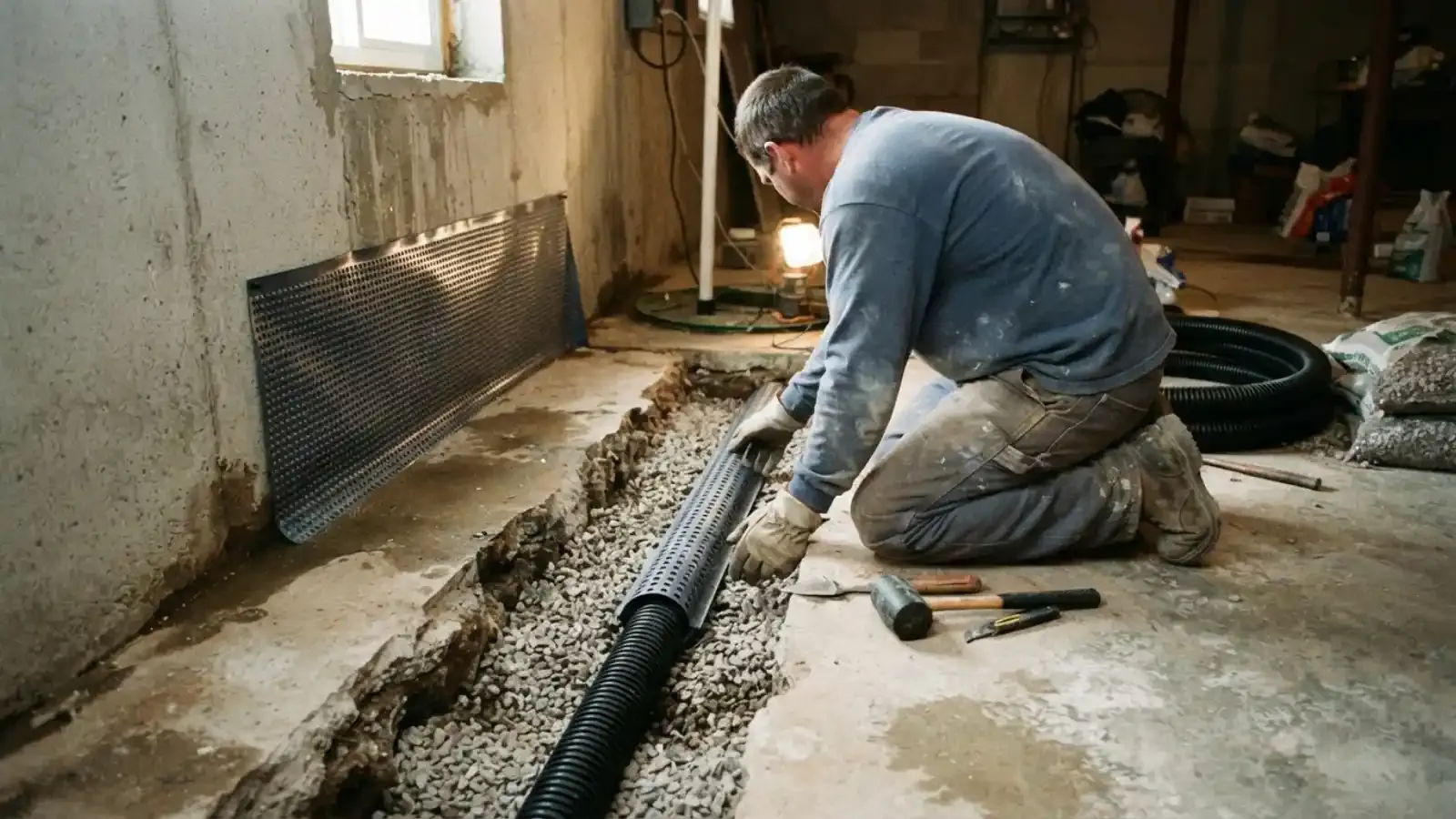
We find and fix leaking pipes and drains, install and repair sump and ejector pumps, trace floor drain backups, and install interior drain lines that connect to a sump. We do not seal foundation cracks, inject walls, regrade soil, or install exterior membranes. We will tell you when the answer is outside plumbing.
Not sure where the water comes from? Call (336) 453-0472 and describe when it appears.
Interior drainage and the sump connection
Interior drainage collects water at the base of the wall or under the slab and sends it to a sump pit, where a pump moves it out. The drain line works only as well as the pump at the end of it, which is why the plumbing half of the job is the pit, the pump, the check valve, and the discharge. See sump pump service for how those parts fit together.
Cutting a channel in a slab is real work, and not every house needs it. If water comes from only one wall during heavy rain, fixing outside drainage may cost far less than opening the floor. A good estimate from any trade explains why interior drainage is the best fit, not only that it is available.
Gutters and grading come first, and they are not plumbing
Many wet basements are fixed outside the house. Downspouts that empty beside the foundation, gutters packed with leaves, and soil that slopes toward the wall all push water toward the basement. Extending downspouts several feet from the house and clearing gutters are inexpensive steps you can take before calling anyone.
Regrading soil and installing exterior drains belong to landscapers and drainage contractors, not plumbers. We will tell you honestly if a visit shows that the water is a grading problem.
When to call a foundation contractor instead
Call a foundation or waterproofing contractor when you see horizontal cracks in a block wall, a wall that bows inward, cracks that widen over time, or water entering at a wall-to-floor joint in several places. Those problems are structural or involve exterior waterproofing, and a plumber cannot solve them with pipes.
A good order of operations is plumber first when pipes or drains are suspected, then a drainage or foundation specialist if the plumber finds no plumbing source. Our leak detection work covers the first step. Callers in 27012, 27023, and 27006 can ask for a visit by phone, and the Lewisville page covers the north side.
Signs moisture needs attention
- A musty smell that returns after cleaning.
- White, chalky mineral deposits on masonry walls.
- Peeling paint or bubbling drywall near the floor.
- Damp spots on the floor after heavy rain.
- Mold on stored boxes or the bottom of walls.
- A sump pit that fills often or has never been tested.
- Water stains below a bathroom or near the water heater.
What makes waterproofing quotes differ
Quotes for moisture control vary widely because the work spans trades. A plumber's share is often the smaller piece, and a fair quote explains what each part covers.
- Source of the waterA pipe repair is a different job than interior drainage along a wall.
- Length of drain lineMore footage means more slab cutting, concrete, and labor.
- Pump and pitA new sump pit, pump, and discharge line add materials and time.
- Access and finishesFinished walls and floors must be opened and restored by other trades.
- Outside workGrading, gutters, and exterior membranes are quoted separately by other contractors.
Homeowners policies usually cover sudden accidental water damage from a burst pipe but often exclude groundwater seepage and flooding, so check yours. Call (336) 453-0472 for your real number on the plumbing work, and you get a clear price before work starts.
Frequently asked questions
Why is my basement wet after rain?
Usually groundwater or surface runoff, a failed sump pump, or a backed-up drain. Start by checking gutters, downspouts, and the sump pit, and call if the pit is full or the pump will not run.
Is it a plumbing leak or groundwater?
Check the water meter with every fixture off. If the dial moves, you probably have a pipe leak. If the meter is still and the water appears after rain, groundwater is the likelier cause.
Do you waterproof foundation walls?
No. We handle the plumbing side, including drains and sump pumps. Wall sealing, crack injection, and exterior membranes belong to foundation and waterproofing contractors.
Do you install interior drains that go to a sump?
We can work on the pit, pump, and discharge, and we tell you when a drain channel needs a contractor to design the layout. Ask when you call.
Do most Clemmons homes have basements?
We do not have data on that, and it varies by house. The advice on this page applies to basements and crawlspaces where moisture appears.
Is Forsyth County stormwater a factor for my home's moisture?
A county water quality document says Muddy Creek drains about 76 percent of the county, and heavy storms can push water into sewer lines. If a basement floor drain backs up in storms, call a plumber, since that is sewer water and not groundwater.
Does waterproofing work need a permit?
It can depend on the scope. Ask the Winston-Salem/Forsyth County Inspections Division at 336-727-2624 whether your project needs a permit.
Standards and sources
Basement Waterproofing work in North Carolina follows the North Carolina State Plumbing Code and the product instructions for drainage and sealing materials. Anyone who does plumbing for hire in the state needs a license under N.C. General Statute 87-21, and the state licensing board runs a public search so you can check a license yourself.
Written by Clemmons 24/7 Plumbing. Questions about permits or inspections go to the Winston-Salem/Forsyth County Inspections Division at 336-727-2624, and questions about the water on the utility side of your meter go to your water provider.