Looking at the sewer line before you buy a house
A standard home inspection often does not look inside the sewer line, because it is buried and out of sight. A camera inspection fills that gap, and it is most useful during the due diligence period, while the price and repairs can still be negotiated. A sewer repair found after closing is the buyer's problem.
Ask the seller whether a cleanout exists. If it does, access is quick. If not, the plumber may need to pull a toilet or find another entry, and that is worth sorting out before the inspection date.
When clogs keep returning
If the same line has been cleared two or three times, a camera is a better investment than a fourth cleaning. Repeat clogs have a cause, whether a sag that holds water, a joint with roots or a buildup that cabling never removed. The video shows which one it is, so the next step can be a jetting visit or a repair instead of guesswork.
It also helps when slow drains seem to have no pattern. A camera can follow the line from the cleanout toward the street or tank and show where the flow changes.
Signs it is time for a look inside the pipe
You do not need a backup to justify a camera visit. These are common reasons to book one:
- You are buying a home and have no record of the sewer line's condition.
- A drain has been cleared several times and keeps slowing down.
- A patch of yard over the line stays wet, sinks or smells.
- A cable stopped at the same point and would not go further.
- Multiple fixtures gurgle or drain slowly with no clear blockage.
- You plan a remodel, addition or landscaping and want to know where the line runs.
Finding where the line runs
Many owners do not know where the sewer line crosses their property. A camera with a locator transmitter lets the plumber trace the line from above ground with a receiver, mark its path and note its depth at points along the way. That matters before digging a fence post, building a deck or planting a tree.
The same trace pinpoints a problem. If the video shows a crack or an offset, the locator marks the spot on the surface so a repair can start there, not with a long exploratory trench.
To book a camera inspection, call (336) 453-0472 and tell us if the goal is a home purchase or repeat clogs.
How an inspection visit works
- Find the entryThe plumber locates the cleanout or another access point and checks that the line is clear enough for the camera to travel.
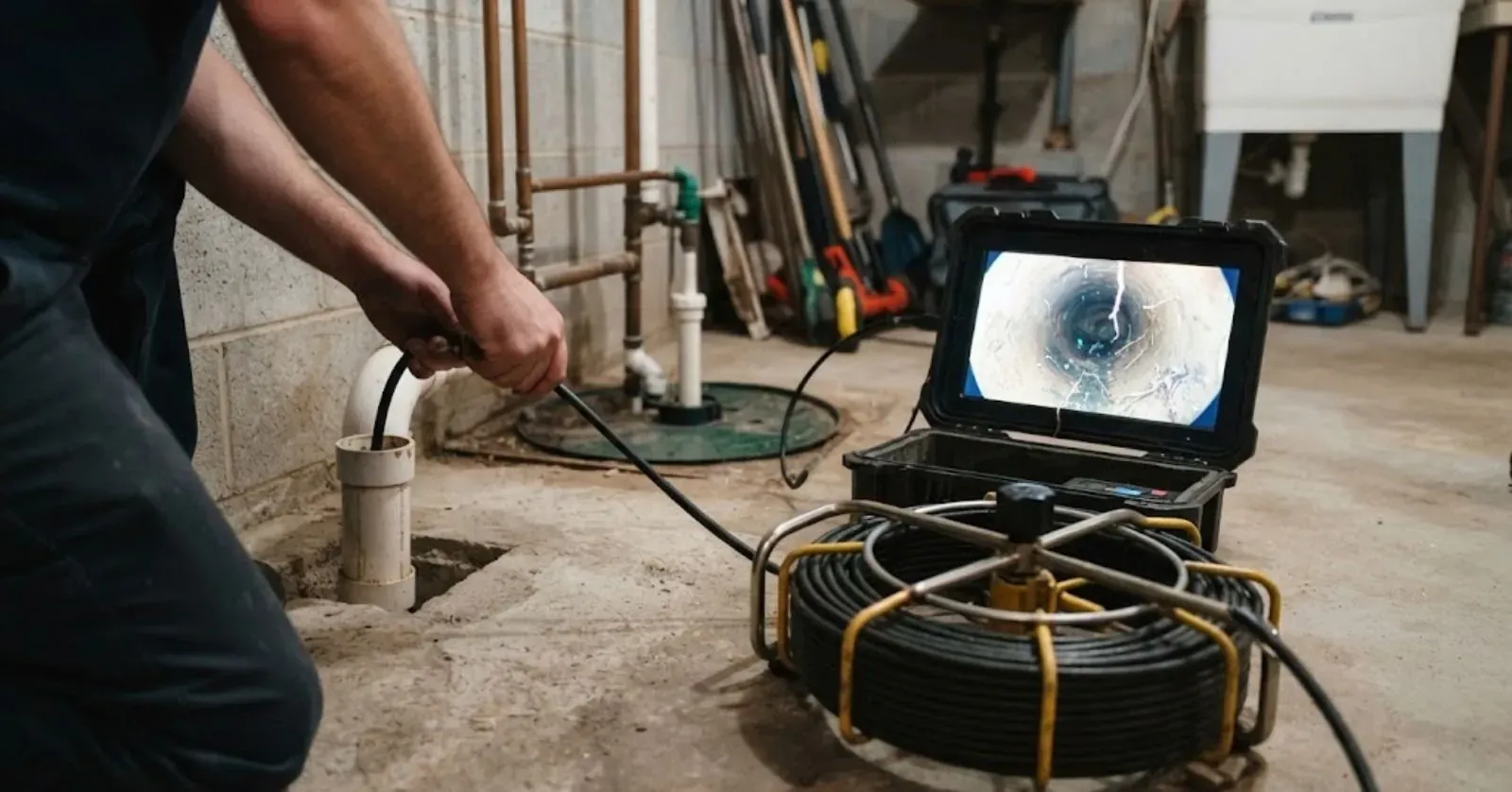
- Run the cameraA flexible cable carries the camera down the pipe while a screen shows the interior and the footage is recorded.
- Note and markCracks, roots, sags, offsets and scale are noted by distance, and the locator can mark them on the ground.
- Walk through the resultsThe plumber reviews the video with you and explains which findings need action now, which can wait and which are only cosmetic.
What the video shows and what it cannot
A camera inspection is a strong tool, but it has limits. This is what to expect from the footage:
| The camera shows | The camera cannot show |
|---|---|
| Cracks, roots and offset joints | The condition of soil or ground outside the pipe. |
| Sags that hold standing water | Problems beyond a full blockage it cannot pass. |
| Scale, grease and heavy buildup | A hairline flaw that is not yet open. |
| Distance to each problem | Whether a pipe will fail in the future. |
| Where a branch or tie-in joins | The septic tank or drain field condition. |
Cracks, groundwater and storm flow
Forsyth County's water quality document says most sudden sewer overflows in the area come from blockages or stormwater entering sewer lines in severe storms. A camera can show whether your own line has cracked joints or loose connections where groundwater might seep in. If it does, fixing them reduces how much extra water your line carries during storms, and you can plan the repair before a heavy rain does it for you.
What an inspection costs and what changes it
A camera inspection is typically priced as its own visit, and the quote depends on a few things. These are the common ones:
- AccessA cleanout makes it fast, and pulling a toilet adds time.
- Length of the lineA longer run takes more footage and time.
- LocatingTracing and marking the line on the surface is added work.
- Cleaning firstA heavily blocked pipe may need clearing before the camera can pass.
- Recorded reportA video copy for a real estate deal or an insurer may take extra steps.
Homeowners policies usually cover sudden accidental water damage but not the failed part or normal wear, so an inspection is generally a cost you carry yourself. Call (336) 453-0472 for your real number, and a clear price comes before work starts.
Inspections in Clemmons and nearby towns
We inspect lines in 27012 and across Clemmons, in 27023 Lewisville and in 27006 Advance. If the home in Lewisville has a septic tank, say so when you call, because the Town of Lewisville advises a professional inspection of the tank at least every three years. A sewer camera looks at the pipe, while the tank needs its own check.
When the footage shows damage, the next step is sewer line repair, and the plumber can walk you through the options. The service area page lists nearby towns if you are unsure whether we cover your address.
Frequently asked questions
How long does a sewer camera inspection take?
It depends on the length of the line, access and how much buildup is in the pipe. A clean, accessible line is quicker than one that needs clearing first, and the plumber can tell you more once they see the cleanout.
Should I get a sewer inspection before buying a house in Clemmons?
Yes, if the seller has no recent record of the line. A standard home inspection does not look inside buried sewer pipe, and a camera shows problems while you can still negotiate.
Can the camera find a sewer line leak?
It can show cracks, offsets and missing sections, which are the usual places a line leaks. It cannot detect leaks that are not visible from inside, so a damp yard may need further testing.
Will I get a copy of the video?
Ask when you book. A recording is useful for comparing quotes, for a real estate negotiation or for sharing with an insurer.
Does the inspection tell me about the public sewer in the street?
No. It covers your own line up to the point where the camera can travel. Winston-Salem/Forsyth County Utilities handles the public sewer, so call it if you suspect a problem there.
Is a sewer inspection useful if my Lewisville home is on septic?
It covers the pipe between the house and the tank. The tank and drain field need a separate inspection, and the Town of Lewisville recommends a professional septic inspection at least every three years.
Does a sewer inspection need a permit?
A camera inspection is not repair work, but if it leads to repairs, ask the Winston-Salem/Forsyth County Inspections Division at 336-727-2624 whether the job needs a permit.
Standards and sources
Sewer Camera Inspection work in North Carolina follows the North Carolina State Plumbing Code and the camera maker's guidance on reading a pipe inspection. Anyone who does plumbing for hire in the state needs a license under N.C. General Statute 87-21, and the state licensing board runs a public search so you can check a license yourself.
Written by Clemmons 24/7 Plumbing. Questions about permits or inspections go to the Winston-Salem/Forsyth County Inspections Division at 336-727-2624, and questions about the water on the utility side of your meter go to your water provider.