Water in my basement after rain: is it the sump pump?
Water showing up after a storm can come from several places. A sump pump that failed, a discharge line that froze or clogged, a floor drain backing up from the sewer, and groundwater seeping through a wall all look similar once the floor is wet. The pit is the first place to check, since a pump pit that is full and not draining points straight at the pump.
That is the symptom, and the technical name for the fix is sump pump repair or installation. If your home has no pit and the water comes from a wall or floor crack, see basement waterproofing for how a plumber sorts out the source.
We do not assume every Clemmons home has a basement. Many homes have a crawlspace pit or no pump at all. This page is for homes that do.
When a sump pump failure is an emergency
A pump that stops during a storm, or one that runs without lowering the water, can put water on a finished floor within hours. Dispatch answers after-hours calls, same-day appointments are offered when available, and the plumber explains the price before work starts.
A power outage is the common cause. These steps help while you wait.
- Check the breaker and the outlet, and confirm the pump is plugged in before assuming it is dead.
- Look at the float. If it is stuck against the pit wall, free it carefully with a long stick, not your hand.
- Do not touch the pump, cord, or water if the water is near outlets or the panel.
- Move stored items, boxes, and electronics off the floor.
- Use a wet-dry vacuum or bucket to lower the pit, but keep the discharge line free.
- Note when the water began and take photos for insurance.
Repair the pump or install a new one
A pump has a limited life and a failing one often shows signs first. This table shows how plumbers weigh repair against a new installation.
| Condition | Likely fault | Repair if | Replace or install if |
|---|---|---|---|
| Runs but moves little water | Clogged intake or failed check valve | Pump body is sound | Impeller is worn or motor hot. |
| Will not start | Stuck float, tripped breaker, dead switch | A float or switch swap restores it | Motor is seized. |
| Cycles constantly | Check valve failing or float misplaced | Replace valve, reposition float | Pit is undersized for the inflow. |
| Loud noise | Debris or worn bearings | Clear debris | Bearings are going. |
| No pump and recurring water | No dewatering at all | Not applicable | Install a pit and pump. |
The parts that decide whether a pump works
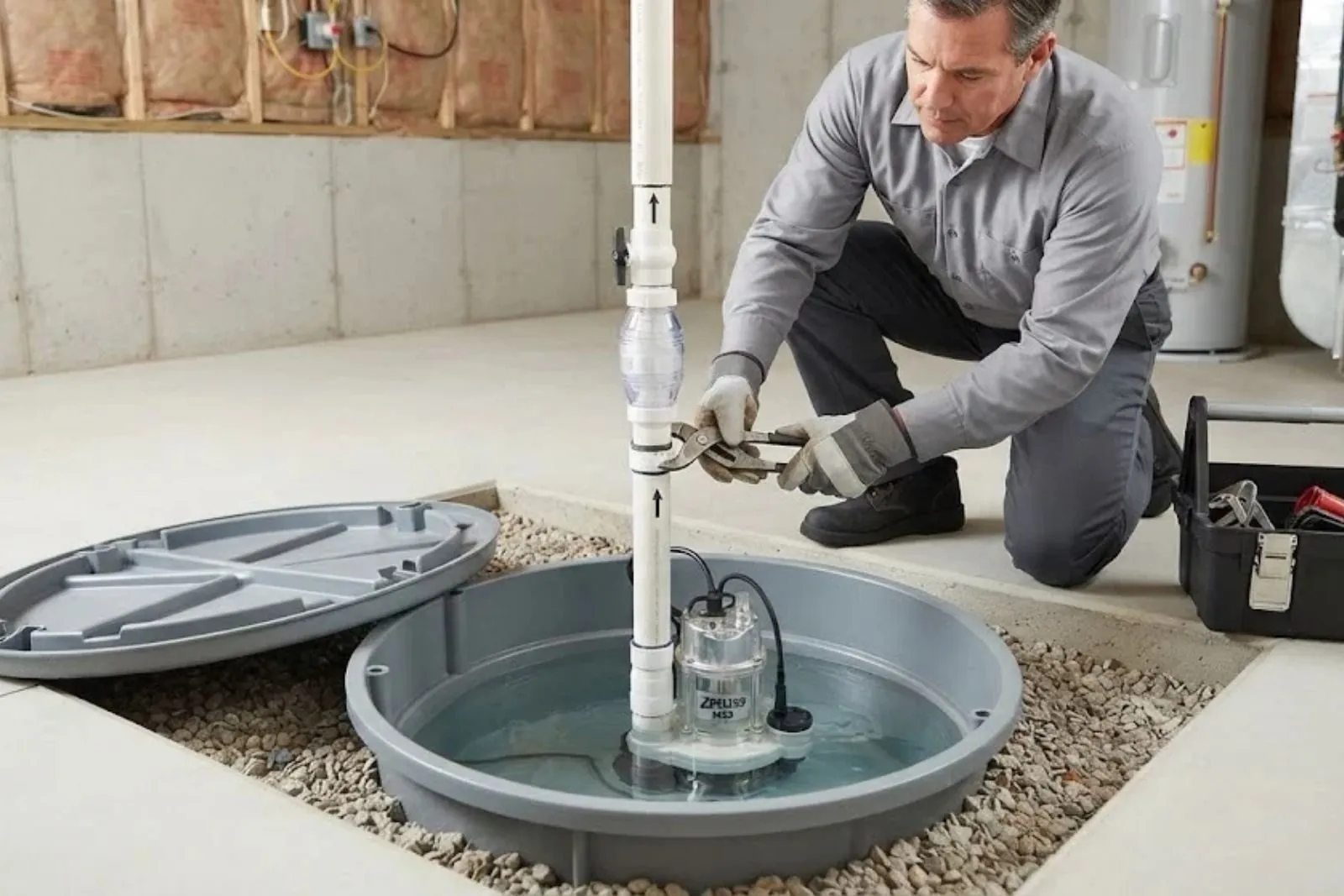
The check valve sits on the discharge pipe above the pump and stops water in the line from dropping back into the pit. A failed one makes the pump cycle over and over, which wears it out. The discharge line carries water outdoors and must run away from the house and not freeze or clog, and where the line empties matters as much as the pump.
The float switch tells the pump when to start. Floats get stuck against the wall or tangled in the cord, which causes the classic case of a good pump that never turns on. A vertical float has less trouble in a narrow pit, and the plumber picks the type that suits your pit.
A battery backup runs a second pump when the power fails, and storms are the time you most need it. It is not magic. A backup has limited run time, and the battery needs testing and replacement on a schedule.
Pit rising and the pump is silent? Call (336) 453-0472 and tell dispatch what you see.
How to test your pump before a storm
- Check the powerConfirm the pump is plugged into a working outlet, ideally a protected one, and the cord is not frayed.
- Fill the pit slowlyPour a few buckets of water in until the float rises. The pump should start, empty the pit, and shut off.
- Watch the dischargeGo outside and see water leaving the discharge pipe, and confirm it flows away from the foundation.
- Listen and lookNote grinding, rattling, or hot-motor smells, and check that the check valve does not slam when the pump stops. Call if anything seems off.
Why storm timing matters around Clemmons
Muddy Creek drains about 76 percent of Forsyth County into the Yadkin River, according to a county water quality document. The same document says that most sudden sanitary sewer overflows come from blockages or storm water getting into sewer lines during severe storms. For a homeowner, that means a heavy rain is the wrong time to find out the pump or the discharge line is not ready.
Test the pump ahead of forecast storms, clear the discharge outlet, and keep the sewer cleanout reachable, and consider sewer line cleaning if drains already run slow. If a basement floor drain or ejector pump is backing up with sewage and not just groundwater, call us right away, since that water carries a health risk. The Lewisville page covers calls from the north side of town.
Signs your sump or ejector pump is failing
- The pump runs loudly or hums without moving water.
- It cycles every few seconds, even in dry weather.
- The pit holds standing water well above the float level.
- A sewer or damp smell comes from the pit or lid.
- The pump is older, rusty, or has never been tested.
- Water appears around the pit after a normal rain.
- An ejector pump gurgles or the basement bathroom drains slowly.
What shapes sump pump costs
Fixing a stuck float and building a new pit with a backup system are very different jobs. These factors set the price.
- Pump typeSubmersible and pedestal pumps differ in power, noise, and lifespan, and ejector pumps are built for sewage.
- New pit or existing pitCutting into a slab to set a pit adds labor that a swap does not.
- Discharge routingLonger or more complex discharge lines require more pipe and care.
- Backup systemA battery backup adds equipment and an extra testing step.
- Condition of the basinA cracked or silted pit may need replacing alongside the pump.
Homeowners policies usually exclude groundwater and often require a separate rider for sump failure, and they rarely cover the failed pump itself, so check your policy. Call (336) 453-0472 for your real number, and the plumber gives a clear price before work starts. We serve 27012 and nearby ZIP codes such as 27023 and 27104.
Frequently asked questions
Do you handle sump pump installation and repair emergencies at night or on weekends in Clemmons?
Yes. Dispatch is 24/7, after-hours calls are answered, and the plumber explains the price before work starts. We do not promise an arrival time during storms because call volume can spike, but we will tell you how to limit damage while you wait.
Why is there water in my basement after it rains?
It may be a failed sump pump, a clogged discharge line, a backed-up floor drain, or groundwater coming through the wall. Check the pit first. If the pit is dry and the water still shows, the source is likely outside the pump system.
Does a sump pump need a battery backup?
It is not required to run, but it protects you when the power goes out in a storm. A backup has limited run time, so test it on a schedule.
Why does my sump pump run when it is not raining?
A failed check valve, a stuck float, or high groundwater can all do it. If it is cycling constantly, call so the pump does not burn out.
Can I discharge my sump pump into the sewer?
Do not assume you can. Ask the Winston-Salem/Forsyth County Inspections Division at 336-727-2624 what is allowed for your property, since stormwater and sewer connections are regulated.
Do Clemmons homes have basements?
Some do and many do not. A pump is needed only where water collects in a pit, basement, or crawlspace, and we can tell you after a visit whether yours needs one.
How often should a sump pump be tested?
Test it before the rainy season and after any long dry spell, and again after any power outage.
Standards and sources
Sump Pump Installation and Repair work in North Carolina follows the North Carolina State Plumbing Code and the pump maker's instructions for the pit, check valve and discharge. Anyone who does plumbing for hire in the state needs a license under N.C. General Statute 87-21, and the state licensing board runs a public search so you can check a license yourself.
Written by Clemmons 24/7 Plumbing. Questions about permits or inspections go to the Winston-Salem/Forsyth County Inspections Division at 336-727-2624, and questions about the water on the utility side of your meter go to your water provider.