When a toilet leak or overflow is an emergency
Call right away if water keeps rising after a flush, if water seeps from the base onto finished flooring, or if a cracked tank is draining. Water that reaches a ceiling below, or that rises in the tub or shower at the same time, points to a drain problem beyond the toilet.
These calls are dispatched around the clock, and the plumber explains the price before any work starts. Until someone arrives, these steps limit the damage.
- Stop flushing, and do not keep plunging a bowl that is still rising.
- Close the stop valve on the wall behind the toilet. If it will not turn, shut the main water valve for the house instead.
- If the bowl is about to spill, lift the tank lid and press the flapper down onto its seat to stop more water entering.
- Set towels around the base and move rugs, cleaners, and electronics out of the wet area.
- Stay out of any room where water has reached an outlet, and switch off that circuit only if you can reach the panel dry.
- Photograph the damage before cleaning up so your insurance claim has a record.
The four parts behind most toilet repairs
The fill valve refills the tank after a flush. The flapper holds that water in the tank, the handle linkage lifts the flapper, and the wax ring seals the base of the toilet to the drain flange. A tank that hisses, or refills on its own with nobody home, usually has a worn flapper letting water creep into the bowl, or a fill valve that no longer shuts off cleanly.
A rocking toilet or a damp ring around the base points lower. Wax compresses over the years, and a loose closet bolt or a cracked or corroded flange lets the toilet shift and break that seal. Sewer odor in the bathroom with no obvious wet spot often traces to the same failed seal.
Swapping a fill valve or flapper is a short visit when parts fit. Resetting a toilet on a new wax ring is routine too, but a flange that sits below the finished floor, or soft subfloor around it, takes longer, and the plumber tells you that before the work begins.
Repair the toilet or replace it
Most toilets with a part failure are worth repairing. The table shows where the line usually falls, though a plumber has to look at the fixture to be sure.
| What you see | Likely cause | Repair works when | Replace when |
|---|---|---|---|
| Tank refills on its own | Worn flapper or fill valve | Parts fit and the tank is sound | No parts exist for the model. |
| Weak or slow flush | Low water level, clogged rim jets, partial drain clog | Adjustment or cleaning restores the flush | It still needs plunging after the drain is clear. |
| Rocking or damp base | Failed wax ring, loose bolts | Flange and floor are intact | Flange or floor must be fixed first. |
| Water under the tank | Worn tank-to-bowl gasket or bolts | A gasket kit fits | The tank is cracked. |
| Crack in bowl or tank | Impact, age, or freeze damage | Not repairable | Always. |
What a new toilet installation involves
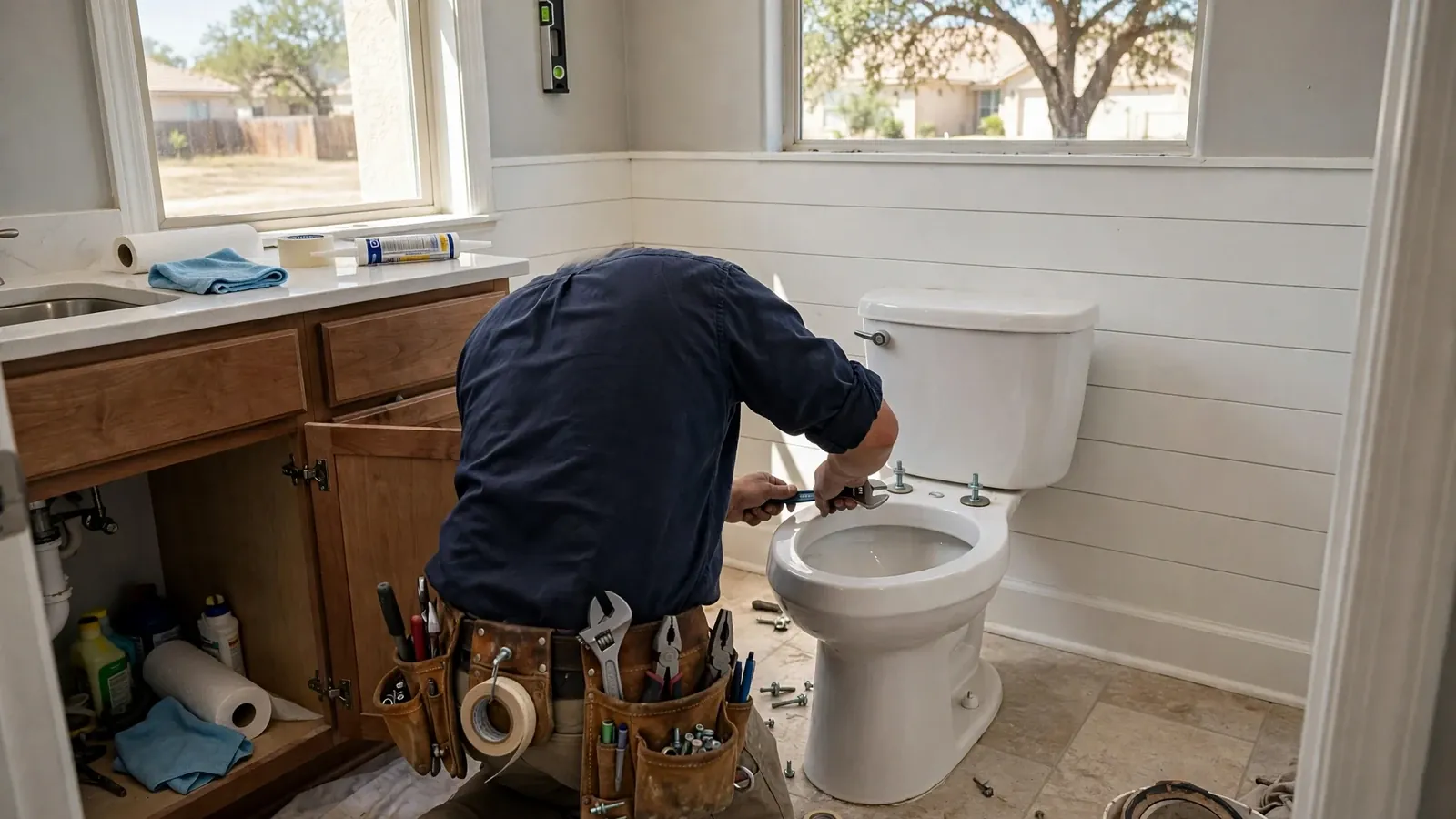
A new install starts with shutting off the supply, draining the tank and bowl, and lifting the old unit off the flange. The flange gets inspected before anything new goes down, because a toilet only seals as well as the surface under it. A new wax ring or wax-free seal goes in, the bowl is set level, and the bolts are tightened evenly so the porcelain does not crack.
Rough-in distance decides which models fit. That is the measurement from the finished wall to the center of the drain, and a mismatch is the most common reason a toilet bought ahead of time cannot be used. If you already own the toilet, tell dispatch the brand, or let the plumber measure first.
Manufacturer instructions govern the final setup, and the North Carolina State Plumbing Code applies to the work. Ask the Winston-Salem/Forsyth County Inspections Division at 336-727-2624 whether your job needs a permit. Same-day appointments are offered when available. We set and repair toilets in 27012 and the nearby ZIP codes 27023 and 27006.
Water on the bathroom floor right now? Call (336) 453-0472 and tell dispatch what the toilet is doing.
Signs your toilet needs a plumber
Some of these are small and some are urgent. All of them get worse with time.
- The tank refills every few minutes with no flush, or you hear a faint trickle at night.
- The handle is loose, sticks down, or must be held to finish a flush.
- A puddle or damp stain shows up around the base after flushing.
- The toilet shifts or rocks when someone sits down.
- Water drips from the tank bolts or from the supply line at the wall.
- A sewer smell lingers in the bathroom even after cleaning.
- Water bubbles in the toilet when a tub or sink drains.
- The water meter keeps moving while every fixture is off.
Running toilets and small leaks you cannot see
A running toilet wastes water without leaving a puddle, so it hides until the bill arrives. Drop a little food coloring into the tank and wait without flushing. If color reaches the bowl, the flapper is leaking.
If the toilet checks out but the meter still turns with every fixture off, the leak is elsewhere in the house, and leak detection finds it with listening gear and pressure testing instead of guesswork.
Toilets on septic systems around Lewisville
The Town of Lewisville says many homes in town use septic systems, and its guidance lists what should never be flushed, including wipes sold as flushable, paper towels, feminine hygiene products, and cat litter. A toilet that keeps clogging in a septic home can point to a full tank or a tired drain field instead of a bad toilet.
In that case a new fill valve will not help. We repair the toilet and the plumbing side of the house, and we will say plainly when the symptom looks like a septic problem so you can have the tank inspected. Our Lewisville service page covers the area north of Clemmons.
Clogs and slow flushes
A toilet that clogs once is usually a paper or object problem, and a plunger or closet auger clears it. One that clogs again within days, or that gurgles when the shower runs, has a drain line issue, and that work belongs to drain cleaning, where a camera and machine reach past the trap.
What shapes the cost of toilet work
Toilet jobs range from a ten-minute part swap to a full replacement with floor repair, so the final number depends on what the plumber finds. These are the factors that move it.
- Repair or replaceA flapper or fill valve costs far less than a new toilet, but an old toilet with several worn parts can cost more to keep than to swap.
- Flange and floor conditionA damaged flange or soft subfloor adds materials and time that only show up once the toilet is lifted.
- Toilet modelRough-in size, height, bowl shape, and water use per flush affect which toilets fit and what they cost.
- Shutoff valvesA stop valve that will not close, or a corroded supply line, is usually replaced during the visit.
- TimingAn emergency overflow in the middle of the night involves different scheduling than a planned install, and the plumber explains that before work starts.
Homeowners policies usually cover sudden accidental water damage but not the failed part or normal wear, so check your policy before assuming a claim applies. Call (336) 453-0472 for your real number, and the plumber gives a clear price before work starts.
What to do before we arrive: toilet overflow steps
An overflowing toilet is messy and unsanitary, but the first minute decides how far the water spreads.
- Turn the supply valve behind the toilet clockwise to stop the tank from refilling.
- Lift the tank lid and press the flapper down, or hold the float up, so no more water enters the bowl.
- Do not flush again, and do not pour chemical cleaner into a clogged toilet.
- Put towels around the base, wear gloves, and wash your hands well after touching floodwater from a drain.
- If sewage is coming up in other drains too, stop using water and call the dispatch line.
Frequently asked questions
Do you handle toilet repair and installation emergencies at night or on weekends in Clemmons?
Yes. Dispatch is open 24/7, after-hours calls are answered, and the plumber explains the price before work starts. We do not promise an arrival time on the phone because it depends on the job queue and the roads, but we will tell you what to shut off while you wait.
Does the wax ring need replacing every time the toilet comes up?
Yes. Once a toilet is lifted, the old wax is deformed and will not seal reliably a second time, so a new ring or wax-free seal goes in with the reset.
Why is my toilet running on its own?
Usually the flapper no longer seals, or the fill valve is not shutting off at the right water level. Both parts are inexpensive and a common repair.
Can you install a toilet I bought myself?
Often yes. Share the brand and rough-in measurement when you call so the plumber can confirm it fits your drain before the visit.
Is there water around my toilet base after every flush?
That points to a failed wax seal, a loose toilet, or a supply line dripping at the wall. Shut the stop valve and call, since a slow leak can rot the subfloor.
Can I keep flushing if my Lewisville home is on septic?
For normal use, yes, but stop and call if the toilet gurgles, drains slowly, or backs up, and keep wipes and paper towels out of it. The Town of Lewisville recommends a professional septic inspection at least every three years.
Does replacing a toilet need a permit in Clemmons?
Ask the Winston-Salem/Forsyth County Inspections Division at 336-727-2624. They issue plumbing permits for Clemmons and can tell you whether your job needs one.
Standards and sources
Toilet Repair and Installation work in North Carolina follows the North Carolina State Plumbing Code and the toilet maker's instructions for flange height and supply connections. Anyone who does plumbing for hire in the state needs a license under N.C. General Statute 87-21, and the state licensing board runs a public search so you can check a license yourself.
Written by Clemmons 24/7 Plumbing. Questions about permits or inspections go to the Winston-Salem/Forsyth County Inspections Division at 336-727-2624, and questions about the water on the utility side of your meter go to your water provider.