When a leaking water heater is an emergency
Water spreading across the floor, a heater that smells of gas or smoke, and scorched wiring all need help now. A slow drip at a pipe connection or a tank that is only lukewarm can often wait for a same-day appointment when available. Tank water can be hot enough to scald, so keep children and pets away from the puddle.
Gas comes first. If you smell gas, leave the building and call the gas utility or 911 before you call us. We do not promise a gas response time, and nobody should relight a heater in a space that may hold gas.
- Turn off the breaker for an electric heater, or set the gas control to off for a gas unit.
- Close the cold water shutoff on the pipe feeding the top of the heater.
- Move boxes and stored items off the floor and set out a bucket or towels under the drip.
- Photograph the data label and the leak, which helps the plumber bring the right parts.
- Call (336) 453-0472. Dispatch is 24/7 and after-hours calls are answered.
Signs your water heater needs repair
Most heaters tell you something is wrong well before they fail outright. These are the signs homeowners describe most often:
- A puddle or damp ring on the floor around the base of the tank.
- Showers that start hot and turn cold much sooner than they used to.
- No hot water at all, even though the breaker or pilot looks normal.
- Rumbling, popping or ticking sounds while the burner or element runs.
- Rust-colored or metallic-smelling hot water, but clear cold water.
- A relief valve pipe that drips or runs, or a water bill that creeps up.
Water heater leak: tank, fittings, relief valve or condensation
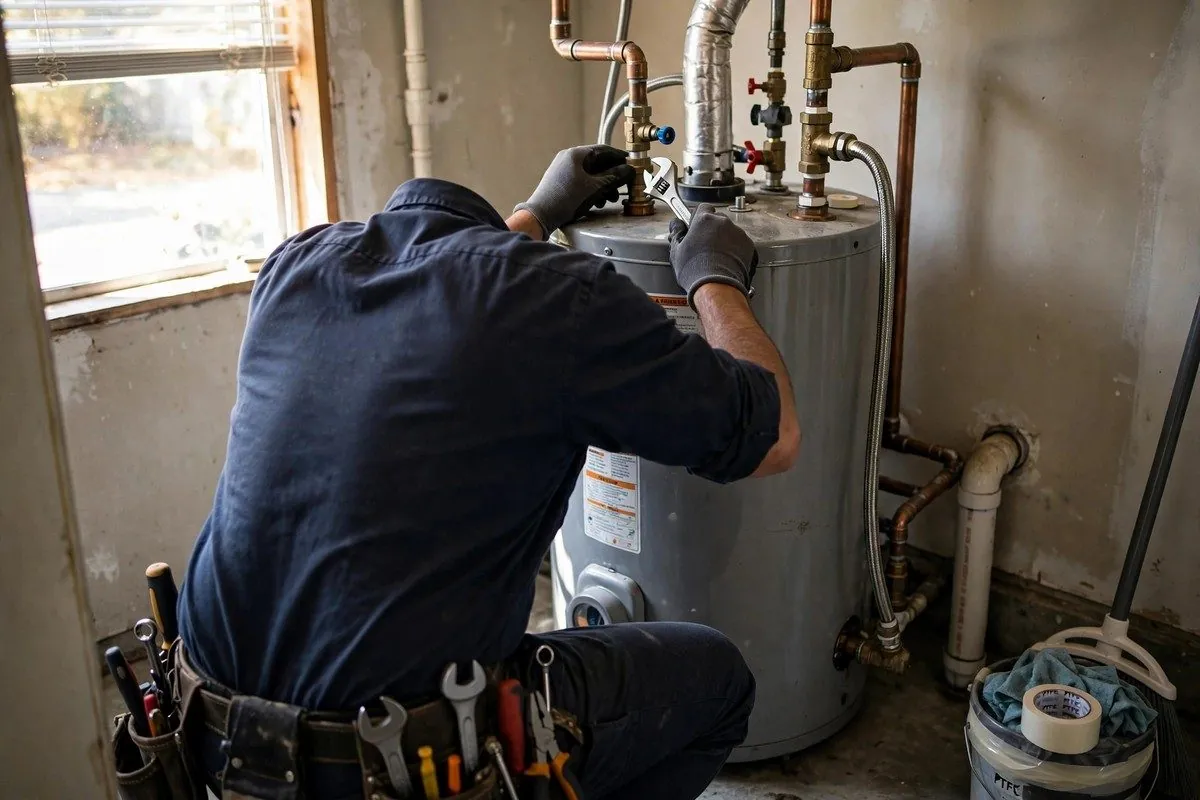
Where the water comes from decides the fix. Water running out of the bottom seam or down the outside of the tank usually means the steel liner has rusted through. That is not a repair, and we will tell you plainly when a tank is finished.
Fittings are the better news. Drips at the cold inlet, the hot outlet or the connectors on top often come from a loose or corroded joint that can be re-made. The drain valve near the bottom can also weep, and replacing that valve is a small job.
The temperature and pressure relief valve has a discharge pipe that runs toward the floor. If that pipe drips, the valve may be worn, or the system may be running at high pressure or temperature. Swapping the valve without checking why it opened can bring the drip right back, so a pressure check belongs in the visit.
Condensation is the fourth source. A cold tank in a humid room, or a gas unit firing after sitting idle, can bead water on the jacket and flue. Wipe the area dry and check it an hour later: if it stays dry, it was condensation, and if it is wet again, call us.
No hot water, or only lukewarm water
Gas heaters lose heat when the pilot or igniter fails, the thermocouple stops sensing flame, or the gas control valve shuts down. Electric heaters lose heat when an element burns out, a thermostat fails, or the high-limit switch trips. The faucet looks identical either way, so the first useful question is which fuel your heater uses.
Hot water that runs out quickly often points to a failed lower element or sediment crowding the bottom of the tank. Water that is hot at the heater but cool at the sink may be a mixing valve or crossover problem, which is a different repair. Check the breaker or the pilot first, because a tripped breaker is an easy fix.
If the power and fuel are fine and the tank is still cold, stop troubleshooting and call (336) 453-0472. Repeatedly resetting a safety switch can hide a real fault.
Symptom, likely cause and typical repair
Use this as a rough guide. A plumber confirms the cause on site, and sometimes two problems overlap.
| Symptom | Likely cause | Typical repair |
|---|---|---|
| Puddle at the base, rusty seam | Corroded tank liner | Replace the heater. |
| Drip at pipe connections | Loose or corroded fitting | Re-make or replace the fitting. |
| Relief valve pipe dripping | Worn valve or high pressure | Test pressure, replace the valve. |
| Lukewarm, runs out fast | Failed element or heavy sediment | Replace the element, flush the tank. |
| No heat on a gas unit | Pilot, igniter or thermocouple | Clean or replace the failed part. |
| Rumbling or popping | Hardened sediment on the bottom | Flush, or replace if the tank is damaged. |
Gas heaters: pilot, igniter and thermocouple
A standing-pilot heater keeps a small flame lit, and a thermocouple proves the flame is there so the gas valve stays open. A dirty or weak thermocouple shuts the gas off every time, which feels like a pilot that will not stay lit. Newer units use an electronic igniter, and a failed igniter or sensor stops the burner from starting at all.
Soot, a rusty burner tray or a blocked flue are also repair-or-stop signs. We will not keep patching a unit that is venting poorly, and a failing gas control valve is often the point where replacement makes more sense.
No hot water or a puddle under the tank? Call (336) 453-0472 and a licensed plumber will talk you through the first steps.
Electric and heat pump hybrid heaters: elements, thermostats and compressors
A standard electric tank has two elements and two thermostats, and one failed part is common. Testing each with a meter takes minutes and tells us which to replace. Always cut the breaker first, since the wiring stays live inside the access panel.
A heat pump hybrid adds a fan, a compressor, an air filter and a condensate drain on top of the tank. Many faults there are simple, such as a clogged filter, a blocked drain or poor airflow in a tight closet. Sealed refrigerant work can need a technician authorized by the manufacturer, and we will tell you if your unit falls in that category.
Anode rods, sediment and the water in your tap
The anode rod is a sacrificial metal rod inside the tank that corrodes first so the steel does not. Replacing a worn rod can slow rusting, but it cannot save a tank that already leaks. Sediment is the grit and mineral that settles on the bottom, and a flush can clear light buildup if the drain valve still works.
The Winston-Salem/Forsyth County Utilities 2025 Water Quality Report lists average hardness of 17.5 ppm, which is soft, so scale tends to build slowly on utility water. That means sediment is less often the main story, but check your bill to see who supplies your water, because some properties use private wells that differ.
A simple tap test with a hardware store hardness strip tells you where your water stands, and we can read it with you on the visit.
What affects the price of a water heater repair
A repair price depends on the failed part and how hard it is to reach, not on a flat rate. We explain the price before work starts, so you can decide with the facts in front of you.
- The part itselfan element, a valve or a thermostat costs far less than a gas control valve or a hybrid compressor board.
- Accessa heater in a tight closet or attic takes longer to open and test than one in an open garage.
- Fuel type and age of the unitsome parts are hard to source for older models.
- Related fixesa corroded shutoff, a bad relief valve or a failing drain line may need work too.
- Timingafter-hours and same-day work involve dispatching outside normal hours.
Homeowners policies usually cover sudden accidental water damage but not the failed part or normal wear, so check your policy if the floor was soaked. Call (336) 453-0472 for your real number.
How a repair visit works
- You call, we ask about the symptomTell us the fuel type, where the water is, and what you already shut off. After-hours calls are answered, and same-day appointments are offered when available.
- Diagnosis on siteWe test power, gas supply, thermostats and pressure, and look at the tank for rust before suggesting a repair.
- A clear price before work startsYou hear the cost and the alternative, including replacement if the tank is the problem.
- Repair, test and cleanupWe replace the part, check for leaks, confirm hot water at the faucet and run the heater through a cycle.
Repair now or plan the next heater
A new element or thermocouple is usually worth it. A leaking tank is not, and no patch holds on a rusted steel shell. If you are on the fence, read about replacing a failed tank or whether a tankless unit fits your household.
If water has already reached the walls or floor, leak detection helps confirm that the heater is the only source. We serve 27012 and nearby areas, including 27023 and 27006, and our Lewisville service page covers the north side.
What we cannot tell you without a visit
We cannot judge the inside of a tank by phone, and we do not repair sealed refrigerant circuits on hybrid units. If your heater is under manufacturer warranty, call the maker first so a repair does not complicate a claim.
Frequently asked questions
Do you handle water heater repair emergencies at night or on weekends in Clemmons?
Yes. Dispatch is 24/7 and after-hours calls are answered. The plumber explains the price before work starts, and we do not promise an arrival time. While you wait, shut off the power or gas and the cold supply.
Why does the pipe from my relief valve drip?
The valve may be worn, or pressure or temperature in the system may be too high. A plumber checks pressure before replacing the valve so the drip does not return.
Why does my hot water run out so fast?
A failed lower element, heavy sediment or a broken dip tube can leave part of the tank cold. It can also mean the tank is simply too small for your household.
Is utility water in Clemmons hard on my water heater?
The Winston-Salem/Forsyth County Utilities 2025 report lists soft water, averaging 17.5 ppm. Wells differ, so check your bill for your supplier and run a tap test if you are on a well.
Do I need a permit for a water heater repair?
Ask the Winston-Salem/Forsyth County Inspections Division at 336-727-2624 whether your job needs a permit. We will not guess for you.
Can you repair a heat pump water heater?
We can handle common faults such as filters, drains, elements and airflow. Sealed refrigerant work may need a manufacturer-authorized technician.
Is it worth repairing a heater that keeps failing?
Compare the repair price to replacement, and check the label and warranty. A repeat failure on a tank with a rusty seam usually means replacement.
Standards and sources
Water Heater Repair work in North Carolina follows the North Carolina State Plumbing Code and the data plate and venting instructions on the heater itself. Anyone who does plumbing for hire in the state needs a license under N.C. General Statute 87-21, and the state licensing board runs a public search so you can check a license yourself.
Written by Clemmons 24/7 Plumbing. Questions about permits or inspections go to the Winston-Salem/Forsyth County Inspections Division at 336-727-2624, and questions about the water on the utility side of your meter go to your water provider.