How a drain tells you it is closing up
Most blockages give notice for days or weeks before the pipe stops completely. These are the usual early signs:
- Water leaves a sink or tub more slowly than it did last month, even after you clean the strainer.
- A gurgle or bubble rises from one fixture when another fixture drains.
- A sour or rotten smell comes up from a drain that looks clean.
- Water stands around your feet in the shower before it finally leaves.
- The toilet bubbles when the washing machine empties.
- A clog comes back within days of being plunged or treated with a store-bought chemical.
What is usually sitting inside the pipe
Grease is the leading kitchen culprit. It leaves the sink as a warm liquid, cools on the pipe wall and catches food scraps until the opening shrinks to a narrow channel. Bathroom drains fill differently, with hair bound together by soap scum into a mat that water struggles to pass.
Other causes are less obvious. Wipes sold as flushable do not break apart like toilet paper, and mineral scale can roughen older pipe so debris catches on it. Outdoor roots can also enter a joint and grow into the line, which no pour-in cleaner will fix. If you already used a chemical opener, tell the plumber, because it can sit in a fully blocked pipe and splash back on the first pass of a cable.
When a clogged drain is an emergency
Call right away if sewage or gray water is rising in a tub, shower or floor drain, if every fixture on the lowest level backs up together, or if water returns after a toilet flush. Those signs mean the blockage sits deeper than one fixture and the house cannot keep draining. After-hours and weekend calls reach the same emergency dispatch as daytime ones.
- Stop using water: no flushing, no dishwasher, no washing machine, no showers.
- Keep children and pets away from standing water, which can carry bacteria.
- Lift rugs, boxes and electronics off the floor near the affected drain.
- Turn off power to a wet area only if you can reach the panel without stepping in water.
- Do not pour chemical cleaner into a backed-up drain. It can splash and burn skin.
- Note which fixtures are affected so the plumber can tell a branch drain from the main line.
Snaking and cabling: what the cable does and where it stops
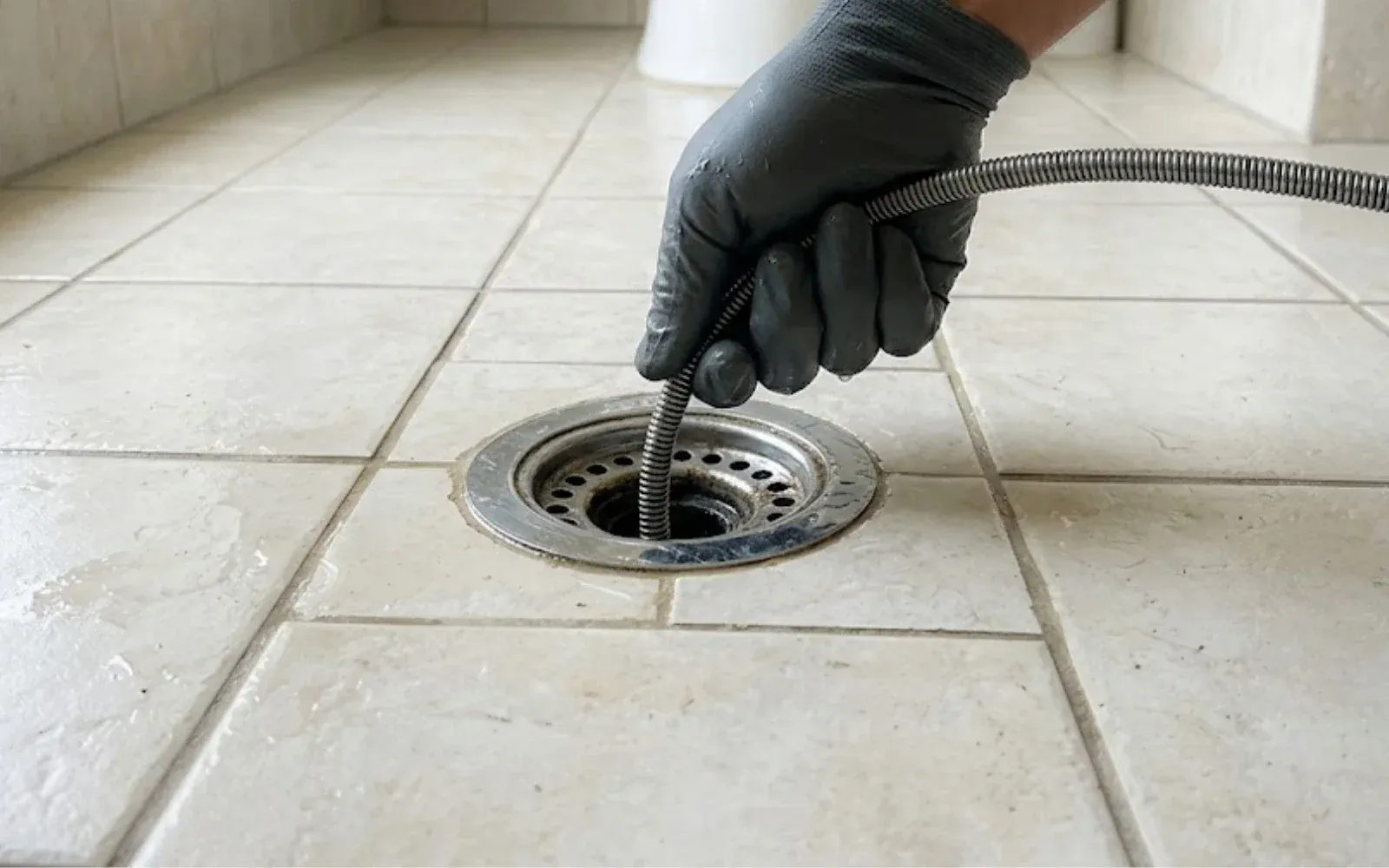
A drain snake, also called a drain cable, is a coiled steel line driven by a hand crank or a small machine. It spins into the pipe, hooks or cuts through the blockage and pulls debris back out. For a hair plug in a tub trap or a soft clog a few feet into a branch line, it is quick and gentle on the pipe.
A cable has limits. It bores a hole through grease instead of scraping the wall clean, so the opening can narrow again within weeks. If that has already happened to you, ask about hydro jetting, which scours the wall with high-pressure water. A cable also cannot explain why a clog formed, so a line that keeps clogging deserves a look with a camera.
Kitchen sink clogs: grease, food and the disposal
The kitchen line carries the worst mix in the house: cooking fat, starchy scraps, coffee grounds and soap. Grease cools and solidifies on the cold pipe wall, so the plug often forms a few feet past the trap or at the first turn into the wall. A double-bowl sink that drains from one side but not the other usually has the clog at the shared tailpiece or just beyond it.
A disposal grinds scraps finer but does not make them disappear. Ground peels and eggshells settle in the same low spot as the grease. If the unit hums and the water will not leave, the blockage is typically downstream, though a jammed unit needs disposal repair rather than a cable.
A dishwasher that leaves dirty water in the bottom shares this drain, so a clog can show up there first. Where possible, the cable goes in through the trap arm or a cleanout instead of being forced through the disposal. Scrape plates, wipe pans with a paper towel and keep fat out of the sink to slow the next buildup.
If water is rising in a drain right now, call (336) 453-0472 and tell dispatch which fixtures are affected.
Matching the method to the clog you have
The right tool depends on where the blockage sits and what it is made of. This is how the common cases usually sort out:
| What you see | Usual approach | Trade-off |
|---|---|---|
| Slow tub or shower with hair in the trap | Pull the trap or run a hand cable | Quick, but reaches only the first few feet. |
| Kitchen sink drains slowly and smells of grease | Machine cable, then jetting if the wall is coated | Cable alone can leave a film that rebuilds. |
| Same clog returns within weeks | Camera look, then jetting | Takes longer but finds the real cause. |
| Several fixtures gurgle together | Clean from the main cleanout | Heavier machine and a larger visit. |
| Roots show on camera | Cutting blades, then a repair plan | Roots return unless the joint is fixed. |
One fixture, or the whole house?
A single slow sink is a branch problem. When the tub, a toilet and the laundry slow down together, the blockage sits where those lines join, in the main drain that carries everything out of the house. That job uses a heavier machine, and our page on main sewer line cleaning explains how it differs from clearing a fixture.
In Lewisville, the Town says many homes have septic systems. On a septic property, widespread slow drains can mean a full tank or a stressed drain field instead of a pipe clog. Clearing the pipe will not help if the tank is the problem, so the first question is always where the water goes after it leaves the house.
What changes the price of clearing a drain
Two clogs that look alike from the sink can take very different amounts of work. These are the factors that move the number:
- AccessA drain with a cleanout is faster than one that needs a toilet pulled or a trap removed.
- DistanceA plug near the fixture is a smaller job than one far down the line.
- MethodA hand cable, a machine cable and jetting use different equipment and different amounts of time.
- CauseA hair clog is a one-time fix, while roots, grease buildup or a sagging pipe add steps.
- Timingthe hour of an emergency visit can affect the price, and the plumber explains it before work starts.
Homeowners policies usually cover sudden accidental water damage but not the failed part or normal wear, so check your policy before you assume. If a backup has soaked flooring, photograph it before anything is moved. Call (336) 453-0472, describe what the drain is doing, and you will hear a clear price before work starts.
Same-day drain help across Clemmons and nearby ZIP codes
We take drain calls in 27012 and across the village, and we also work in 27023 Lewisville and 27006 Advance. When a same-day appointment is open, it is offered, and after-hours calls go straight to emergency dispatch.
Tell the dispatcher which fixtures are affected, how long the problem has lasted, whether you used a chemical cleaner and whether a disposal is involved. Those four details let the plumber bring the right cable or jetting hose on the first trip. For the surrounding towns we serve, see the full service area.
Frequently asked questions
Do you handle drain cleaning emergencies at night or on weekends in Clemmons?
Yes. Dispatch runs 24/7, including nights and weekends. The plumber explains the price before work starts, and we do not promise an arrival time because it depends on the calls ahead of yours.
Why does the kitchen drain clog again soon after it was cleared?
A cable can punch a hole through grease without removing the film on the pipe wall, so the passage narrows again in a few weeks. Jetting scours the wall, and a camera look shows whether a belly or a damaged joint is catching the grease.
Will a drain cable damage my pipes?
Used correctly, a cable is gentle on sound pipe. Older, brittle or already cracked pipe is more vulnerable, so tell the plumber what you know about the line and the visit will be adjusted.
Should I try a chemical drain opener first?
We advise against it for a fully blocked drain. The liquid sits in the pipe, can soften fittings and is a splash hazard when a cable goes in. A plunger is a fair first step for a single fixture.
How do I know if the blockage is in my house or in the public sewer?
If only your home is affected, the blockage is typically on your side. If neighbors are backing up too, the public line may be involved. Forsyth County's water quality document says most sudden sewer overflows come from blockages or stormwater entering lines in severe storms, so call Winston-Salem/Forsyth County Utilities if the neighborhood is affected.
Does clearing a drain need a permit in Clemmons?
Ask the Winston-Salem/Forsyth County Inspections Division at 336-727-2624 whether your job needs a permit. If the clog turns out to need pipe replaced, we will tell you before the work begins.
Can you clear drains at a Lewisville home that has a septic tank?
Yes, we can clear the branch drains inside the house. If the real problem is the tank or the drain field, we will say so, because cabling the house pipe cannot fix either one.
Standards and sources
Drain Cleaning work in North Carolina follows the North Carolina State Plumbing Code and the access and trap guidance in the equipment makers' instructions. Anyone who does plumbing for hire in the state needs a license under N.C. General Statute 87-21, and the state licensing board runs a public search so you can check a license yourself.
Written by Clemmons 24/7 Plumbing. Questions about permits or inspections go to the Winston-Salem/Forsyth County Inspections Division at 336-727-2624, and questions about the water on the utility side of your meter go to your water provider.