Warm floor, sound of running water, or a bill that keeps climbing?
Most hidden leaks announce themselves indirectly. A floor that feels warm in one patch, a faint hiss when every tap is closed, a musty closet or a bill that rises with no change in habits all point to one thing: pressurized pipe losing water out of sight.
The trade calls the work leak detection. Its job is to turn that vague symptom into a specific location, so the repair is a small opening in one place instead of a demolition project.
How plumbers pinpoint a leak you cannot see
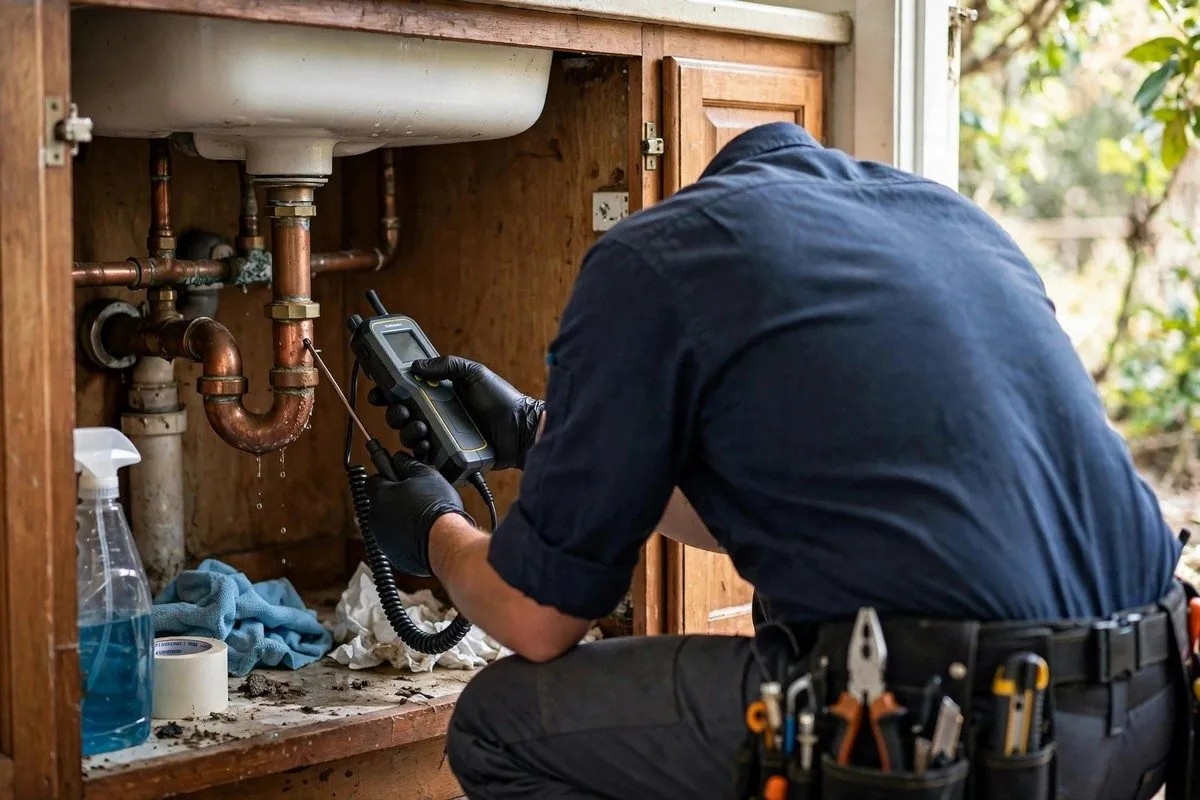
No single tool finds every leak, so a detection visit usually stacks several. The plumber starts by isolating parts of the system, then lets what you describe decide which method comes next.
A visit has limits. A tiny seep inside a wall can look like condensation, so we tell you what was ruled out.
- Acoustic listening: sensitive microphones and ground sensors pick up the hiss of water escaping a pressurized pipe, and the loudest point on the floor or wall marks the likely spot.
- Thermal imaging: a camera shows temperature differences, which reveals a hot-water line leaking under flooring or a cold, damp patch behind drywall.
- Tracer gas: a non-flammable mix of hydrogen and nitrogen is pushed into an emptied line, and a sniffer finds where it escapes. It works on lines too quiet to hear.
- Pressure testing: the plumber isolates a section, pressurizes it and watches a gauge. A drop means the leak is inside that section, and testing smaller sections narrows it further.
When a hidden leak is an emergency
Call right away if water is flowing through a ceiling, if the meter dial spins fast with everything off, if a hot patch appears on a floor, or if water is reaching outlets, a panel or light fixtures. Slow, steady leaks can often be booked as a same-day appointment when available, but active flooding gets after-hours dispatch at any time, including nights and weekends.
- Close the main water shutoff, usually where the line enters the house or at the meter box.
- If water is near outlets or a light fixture is holding water, switch off power to that area at the breaker, but only if you can reach the panel without standing in water.
- Open a low faucet briefly to drain pressure from the pipes, then close it.
- Move rugs and electronics and catch drips in buckets. Stay out from under a bulging ceiling.
- Photograph the damage before cleanup so your insurance claim has a record.
- Call (336) 453-0472 and tell the dispatcher where the water is showing up and what you have already shut off.
Meter still moving with every tap off
A water meter counts everything that enters the house, which makes it the quickest honest test for a hidden leak. When every fixture is off and the dial or low-flow indicator still creeps, water is going somewhere. A slow drift usually means a small constant loss, such as a running toilet or a pinhole. A fast spin points to a larger break on the pressurized side.
A high bill with a still meter at the moment you check can still mean a leak. Some leaks run only when an irrigation timer, a relief valve or a softener cycle opens, so compare several months of bills. Check your bill to see who supplies your water, because some properties use private wells and have no utility meter.
Reading the meter tells you whether the loss is inside the house or outside it, but not where. The test below separates the two.
Run a meter test at home in about half an hour
- Stop all water useTurn off taps, the dishwasher, washing machine, ice maker and irrigation. Do not flush toilets, and make sure no softener regeneration is scheduled.
- Read the meterOpen the meter box lid and find the low-flow indicator, a small triangle or wheel that turns with even a trickle. Write down the register numbers.
- Wait and rereadLeave everything off for 15 to 30 minutes, then read again. Any change in the numbers, or an indicator still turning, means water is escaping.
- Isolate the houseClose the main shutoff at the house and watch the meter again. If it keeps moving, the leak is between the meter and your valve. If it stops, the leak is inside the house.
Slab leaks: warm spots, running sound and damp flooring
A slab leak is a leak in a pipe that runs under or inside the concrete foundation slab. Typical signs are a warm or hot patch on the floor, the sound of water running when everything is off, a damp carpet edge or baseboard with no source above it, and a bill that jumps. Hot-line leaks warm the concrete, which is why bare feet often find the problem first.
Some homes have hydronic radiant heat, with hot water in tubing under the floor. A warm floor is normal there, so the clue is a spot that is new, uneven or paired with falling system pressure.
Detection starts with pressure testing the hot and cold lines separately to see which one is losing pressure. Acoustic listening and thermal imaging then place the leak within a small area of floor.
The repair choices are opening the slab at the spot, rerouting the line through walls or the attic, or repiping the affected run. The right one depends on how many leaks there are, the age of the pipe and how much access you have. We do not have a separate slab leak page, so this section is the full picture, and the dispatcher can walk through your layout on the phone.
Stains on a ceiling or wall: pipe, roof or condensation?
A brown ring on a ceiling or a paint bubble on a wall is a symptom, not a diagnosis. Water can come from a supply line, a drain, a shower pan, an air-conditioning condensate line or the roof, and it travels along framing before it shows.
Timing is a useful clue. A stain that grows only after rain points to the roof or flashing. One that grows after showers or when the dishwasher runs points to a drain or a tub. A stain that spreads steadily with nothing running suggests a pressurized supply line.
Moisture meters and thermal imaging map the wet area without opening it, and a pressure test confirms whether the supply side is the cause. If the source is the roof or an air-conditioning pan, we say so rather than sell a plumbing repair.
If the meter will not stop or a ceiling is wet, call (336) 453-0472 and a licensed plumber will start narrowing down the source.
Leaks under the house or in a crawlspace
Under-floor leaks hide well. Signs include a floor that feels soft or bouncy, damp insulation hanging from the joists, a musty smell rising through vents or a meter that runs more than it used to. Mildew and pests often show up before the owner notices any water.
Detection is hands-on. The plumber enters with a light and thermal camera, looks over supply and drain lines and pressure tests sections. Drain leaks only appear while water flows, so you may be asked to run a tub while the plumber watches.
Do not go under a house that has standing water near wiring. Stop water use, close the main and call. Check gutters and grading too, because runoff can mimic a pipe leak.
Underground and buried line leaks
The buried line that carries water from the meter to the house can crack, corrode or be crushed by roots and shifting soil. Signs include low pressure, a meter that runs with the house shut off, a soggy or oddly green patch of yard, or a small dip in the ground. The lawn can also stay dry if the water drains into gravel or a ditch.
Listening gear and tracer gas work without digging. Once the spot is marked, the repair is a small excavation and a replaced section. Ownership and repair options are on our water service line repair page.
Signs of a hidden leak worth checking today
- The meter or its low-flow indicator moves when every fixture is off.
- A warm or hot spot on the floor, or flooring that is cupping or lifting.
- A faint hiss or trickle in a wall, closet or near the water heater.
- A water bill that rose for two or more months with no change in use.
- Musty smell, new mildew or peeling paint on a ceiling or wall.
- Low pressure at every fixture, not just one tap.
Irrigation, yard and meter-box leaks
Irrigation systems leak at valves, heads and buried lateral lines, and a stuck zone valve can run for hours. If the meter moves only while one zone runs, an irrigation specialist may be the better first call, and we can pressure test the house side so you know where to look.
Water pooling inside the meter box, or a wet spot right around it, often means a leaking fitting at the meter. The meter belongs to the water provider, so call them first. City and county utility customers can reach CityLink at 336-727-8000, and your bill shows who supplies your water.
If your property has a pool or spa
This applies only if you have a pool or spa. A pool that drops faster than evaporation explains, or wet ground around the equipment pad, can point to a leak in the circulation plumbing. A bucket test helps: set a weighted bucket of pool water on a step and compare levels after a day. We pressure test plumbing lines, but liner and shell leaks belong to a pool contractor.
Shops, offices and other commercial buildings
Commercial leak work involves shared risers, tenant access and after-hours scheduling, covered on our commercial plumbing page.
Which detection method fits which leak
This is how the trade usually matches a clue to a first test, and the plumber may reorder it on site. We serve 27012 as well as 27023, 27006 and 27106.
| What you notice | First test | Why | Usual next step |
|---|---|---|---|
| Meter moves, house shut off | Meter test, isolate main | Splits yard from house | Listen along buried line. |
| Warm floor spot | Pressure test hot line | Hot lines warm concrete | Thermal image, then access. |
| Ceiling stain after showers | Moisture mapping | Finds the wet edge | Pressure test, open small hole. |
| Floor soft, damp insulation | Crawlspace inspection | Supply or drain visible | Repair section in place. |
| Quiet leak, no sound | Tracer gas | Gas escapes where water does | Mark spot, repair. |
What affects the cost of leak detection
Detection is billed on the work needed to find the leak, and the repair is quoted once the location is known. Same-day appointments are often available when scheduling allows, and emergency dispatch runs around the clock.
- Number of testsone pressure test is quicker than a visit adding listening, thermal imaging and tracer gas.
- Accessa crawlspace is faster to inspect than a slab under flooring.
- Pipe locationburied lines add equipment time and may need excavation.
- Repair scopea one-spot fix differs from replacing a run of aging pipe.
- Restorationdrywall, flooring and paint are separate from plumbing.
Homeowners policies usually cover sudden accidental water damage but not the failed pipe or normal wear, so check your policy before work starts. Call (336) 453-0472 for your real number, because the plumber explains the price before work starts.
Frequently asked questions
Do you handle leak detection emergencies at night or on weekends in Clemmons?
Yes. Dispatch is 24/7, including after hours. The plumber explains the price before work starts. We do not promise an arrival time, but we tell you what to shut off and what to protect while you wait.
Why is my water bill so high when I have not changed how I use water?
A hidden leak is the usual suspect. Run the meter test above, and if the meter moves with everything off, call. A running toilet or a leak outside the house can both do this, and the test tells you which side to check first.
Can you find a leak without cutting into the wall or floor?
Usually the location can be narrowed to a small area with listening gear, thermal imaging and pressure tests, so any opening is small. A few cases still need a test hole to confirm, and we explain that before cutting.
Who do I call about a leak at the meter box in Clemmons?
Usually the leak is narrowed to a small area with listening gear, thermal imaging and pressure tests, so any opening is small. A few cases need a test hole to confirm, and we explain that before cutting.
Do you serve my ZIP code for leak detection?
We serve Clemmons 27012 and nearby addresses including 27023, 27006, 27106 and 27104. For Lewisville homes see our Lewisville plumber page, or call (336) 453-0472 and the dispatcher will confirm.
Does fixing a leak need a permit?
It depends on the work. Ask the Winston-Salem/Forsyth County Inspections Division at 336-727-2624 whether your job needs a permit, and check any plumber on the North Carolina licensing board lookup. Our service area page lists the towns we cover.
Standards and sources
Leak Detection work in North Carolina follows the North Carolina State Plumbing Code and the testing instructions for pressure gauges and listening gear. Anyone who does plumbing for hire in the state needs a license under N.C. General Statute 87-21, and the state licensing board runs a public search so you can check a license yourself.
Written by Clemmons 24/7 Plumbing. Questions about permits or inspections go to the Winston-Salem/Forsyth County Inspections Division at 336-727-2624, and questions about the water on the utility side of your meter go to your water provider.