Brown water, weak showers and pinhole leaks that keep returning
Brown water after sitting overnight, a shower that dribbles and a pinhole leak with a new sibling each year often share one cause. The inside of the pipe is wearing out.
The fix for that is called repiping. It replaces the failing supply lines so water stops reaching your taps through rust, scale and thinned metal.
Signs the pipes have reached the end
- Discolored water at several taps, especially first thing in the morning.
- Low pressure throughout the house that a filter or aerator change did not fix.
- Repeated pinhole leaks or green and white crusting at joints.
- Flaking, rough or heavily rusted galvanized steel pipe in the basement or crawlspace.
- Visible bulging or weeping at fittings on older piping.
- Banging, whistling or water hammer when taps close.
- Water stains on ceilings or walls near pipe runs.
Repair a little longer, or repipe now?
One leak does not mean the house needs new pipe. The pattern of leaks and the condition of the pipe nearby decide it.
| Situation | Lean toward | Why | Risk of waiting |
|---|---|---|---|
| One leak, pipe otherwise sound | Repair | Cheaper, less disruption | Low. |
| Several pinholes in one run | Replace that run | Thin walls fail in sequence | More leaks, water damage. |
| Galvanized pipe, low flow | Repipe | Rust narrows the bore | Pressure keeps falling. |
| Rust-colored water | Test, then repipe | Source may be inside pipes | Appliance and fixture wear. |
| Selling or remodeling soon | Repipe while open | Walls are already open | Repeat demolition later. |
PEX or copper: an honest comparison
Both materials are accepted by the North Carolina State Plumbing Code when installed by the manufacturer's instructions. Neither is best everywhere.
| Factor | PEX | Copper |
|---|---|---|
| Install | Flexible, fewer fittings, less wall opening | Rigid, more joints, more cutting. |
| Freeze tolerance | Expands more before splitting | Splits sooner when frozen. |
| Long-term track record | Shorter history, UV sensitive outdoors | Decades of use, proven. |
| Water quality | Can affect taste for some people | Resists bacteria, can pit in aggressive water. |
| Material cost | Usually lower | Usually higher. |
How we help you pick between them
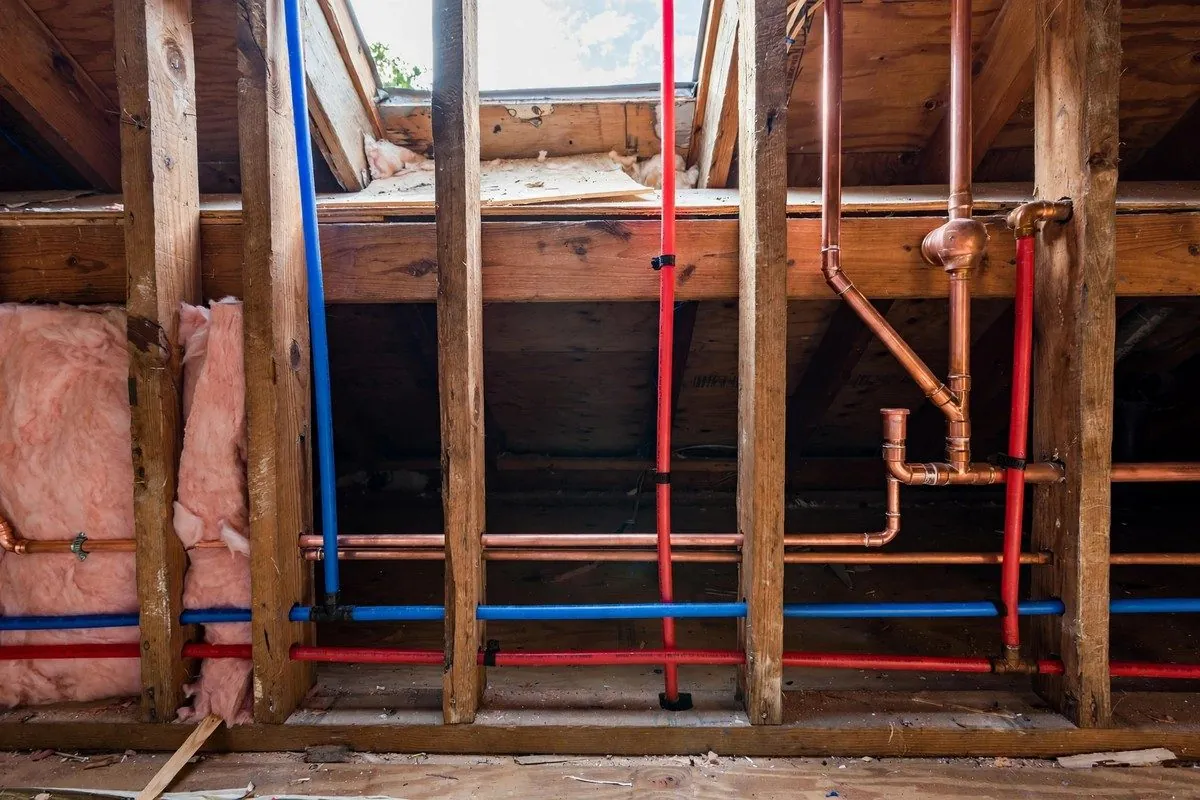
PEX is the common choice for whole-house repipes because it threads through walls with fewer openings, which keeps the drywall repair smaller. Copper costs more and takes more labor, but some owners prefer it for exposed runs or for its long record. A mixed approach, with copper where lines are visible and PEX behind walls, is also sound.
Check your bill to see who supplies your water. The Winston-Salem/Forsyth County Utilities 2025 report lists average hardness of 17.5 ppm, which is soft, and pH between 6.4 and 8.0. We use that as one input, not a rule, and private well water varies so we do not guess its chemistry.
If the same pipes keep failing, call (336) 453-0472 and get an honest opinion on repair versus repipe.
Replacing galvanized steel pipe
Galvanized steel is iron pipe with a zinc coating. Over decades the zinc wears away and rust builds up inside, which narrows the bore and tints the water. Joints leak first, and a fixed leak often reveals a second weak spot a few inches along.
Replacement is usually the better path when galvanized pipe is the main supply. Patching it can work for a single failed fitting, but each repair disturbs neighboring corroded pipe. If your house has this pipe, plan the repipe before the leaks pile up.
What a repipe disrupts and how the work goes
- Walk-through and planThe plumber maps the existing runs, plans new routes and identifies where access holes are needed.
- Water off for the dayWater is shut off while the old lines are removed and new ones installed, so plan to be without water for most of the work period.
- Access holesSmall openings are cut in drywall, usually near fixtures and in closets, ceilings or garages. They are patched afterward, though painting is not included in plumbing work.
- Test and restoreThe new system is pressure tested, flushed and inspected before the walls are closed.
Permits and inspection
Ask the Winston-Salem/Forsyth County Inspections Division at 336-727-2624 whether your repipe needs a permit and what inspection is required. Verify your plumber on the North Carolina licensing board lookup at public.nclicensing.org.
A licensed plumber pulls permits when required. If a contractor suggests skipping them, treat that as a warning sign.
What drives the price of a repipe
Repiping is quoted after a walk-through, not on the phone, because every house routes differently.
- House size and layoutmore fixtures and floors mean more pipe and more openings.
- MaterialPEX and copper differ in both material and labor.
- Accesscrawlspace and open basement runs are quick, while slab or finished-wall runs are not.
- Scopea whole house differs from one bathroom group or a single failing run.
- Wall repairdrywall patching and painting are separate.
Insurance and scheduling
Homeowners policies usually cover sudden accidental water damage but not the worn pipe itself, so a planned repipe is typically your cost. Call (336) 453-0472 and we will walk through your situation. Same-day appointments are available when scheduling allows.
If a pipe is actively leaking now, see leak detection or burst pipe repair. Planning new rough-ins at the same time? Our plumbing installation page explains. We work in Clemmons 27012 and nearby 27023 and 27104, and the service area page lists nearby towns.
What to do before we arrive: get the house ready for pipe work
Repiping opens walls and shuts off water for part of the visit, so a little preparation prevents surprises.
- Find your main water shutoff and make sure it turns, because a stuck valve changes the plan.
- Clear a path to the water heater, the main shutoff and any walls with visible pipe.
- Move furniture, rugs and wall hangings away from the areas where pipe runs.
- Keep children and pets away from open walls, cut pipe and work areas.
- Photograph each room before work starts so you have a record for your own files and your insurer.
Frequently asked questions
Why does my water look brown, and do I need a repipe?
Brown or orange water after sitting often means rust from old steel pipe. If it appears at several taps, a plumber can inspect the pipe. Rust from the street is a separate case, so ask your water provider too.
How long does a repipe take?
It depends on the house, but the water is usually off for most of the work period. The plumber explains the schedule at the walk-through.
Is PEX safe for drinking water?
Yes, when installed to the manufacturer's instructions and code. Some people notice a slight taste in new PEX that fades after flushing.
Will you have to cut holes in my walls?
Usually a few small access holes, planned near fixtures and closets. Open basements and crawlspaces reduce this. Patching is part of the plan, painting is separate.
Do I need a permit to repipe my house?
Ask the Winston-Salem/Forsyth County Inspections Division at 336-727-2624. We do not guess which jobs are exempt.
Should I repipe before I sell?
If the pipes are failing, buyers' inspectors will find it. Call us and we will tell you honestly whether repairs or a repipe fits your timeline.
Do you handle repipe calls in Lewisville?
Yes, we serve Lewisville 27023 and the rest of the area. See our Lewisville plumber page.
Standards and sources
Repiping work in North Carolina follows the North Carolina State Plumbing Code and the pipe and fitting makers' instructions for copper or PEX. Anyone who does plumbing for hire in the state needs a license under N.C. General Statute 87-21, and the state licensing board runs a public search so you can check a license yourself.
Written by Clemmons 24/7 Plumbing. Questions about permits or inspections go to the Winston-Salem/Forsyth County Inspections Division at 336-727-2624, and questions about the water on the utility side of your meter go to your water provider.