The pieces of a tub rough-in
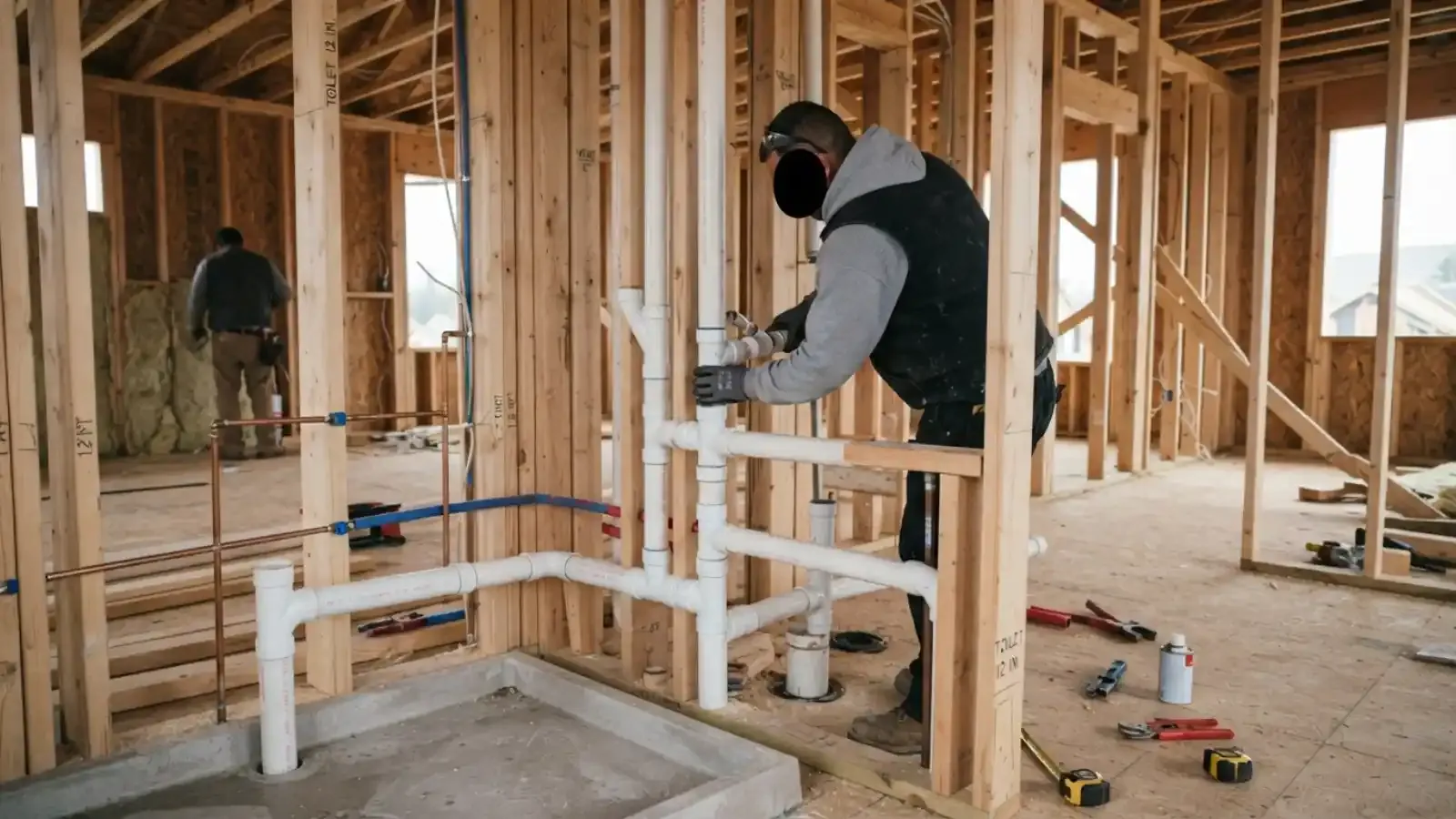
Each part has a job, and each can fail in its own way. This is how they fit together.
A tub also carries weight when full, so the floor and supports under it matter as much as the pipes. Follow the manufacturer's installation instructions for how the tub must be bedded and supported.
| Part | What it does | What goes wrong |
|---|---|---|
| Drain and overflow | Carries water out of the tub, overflow catches a rising level | Leaks at gaskets, hair clogs. |
| Trap | Holds a water seal that blocks sewer gas | Dries out, clogs, or is missing. |
| Vent | Lets air in so water drains smoothly | Gurgling, slow drains, siphoned trap. |
| Valve box | Houses the mixing valve behind the wall | Wrong depth, hard to reach later. |
| Supply lines | Bring hot and cold to the valve and spout | Leaks at joints before the wall is closed. |
Drain, trap and vent: the three that drain a tub
The tub drain connects to a trap, which holds a small plug of water. That water blocks sewer gas from rising into the bathroom. The trap then ties into a drain line that slopes toward the main stack or branch.
A vent gives the system air. Without it, water leaving the tub pulls a vacuum that can siphon the trap dry or make the drain gurgle and run slowly. Venting rules are detailed, so ask the Winston-Salem/Forsyth County Inspections Division at 336-727-2624 what your job needs instead of guessing.
Setting the valve box and spout
The valve box is the body of the faucet that lives inside the wall. Manufacturer instructions set the depth from the finished wall, and the tile or surround thickness you choose changes that number. Setting it too deep or too shallow leaves the trim out of reach or the handle floating off the wall.
Decide on tile, panels or a prefab surround before the valve is fixed, since the finished thickness changes the answer. Plan the spout height and the shower arm, if there is one, in the same pass. Our faucet repair service can later swap a worn cartridge or handle, but a valve set at the wrong depth is a rebuild.
Why you want an access panel
Many tubs are placed against an exterior wall or over a finished room. Think about where a plumber would work if the valve leaked in ten years. The best time to make that spot reachable is now.
Drain and valve parts wear out. A small access panel on the wall behind the plumbing, or a way to reach the trap from below, turns a future repair into a short visit instead of cutting through finished tile.
Tub rough-in is easy to get wrong behind a finished wall, so call (336) 453-0472 to talk through your plan.
Slab floor or framed floor: how the rough-in changes
On a framed floor, the tub drain and trap sit between floor joists, and the plumber may be able to work from below if there is a crawl space or basement. Notching or drilling joists affects the floor's strength, so framing rules matter and the Inspections Division can tell you what is allowed.
On a slab, the drain pipe runs inside or under concrete. A new tub location may mean cutting the slab to place the drain, and an existing slab leak or a damaged pipe underneath can be found only with the floor open. We cannot tell what your floor needs without seeing it.
A sequence that keeps the rough-in on track
- Choose the tub and surroundGet the model, drain position, overflow type and surround thickness settled first, because the rough-in follows the product.
- Check the layout with a plumberWalk the space and confirm drain location, vent path, supply routes and where the valve box and access panel will go.
- Ask about permitsCall the Winston-Salem/Forsyth County Inspections Division at 336-727-2624 and ask whether the work needs a permit and an inspection before walls close.
- Pressure test and leak checkTest the drain with water and the supply lines under pressure before any wall or tile covers them.
Comparing quotes for rough-in work
A fair quote lists what is included. Use these questions when you compare written bids from different plumbers.
- Does it include the drain, overflow, trap and any vent changes?
- Is the valve and trim included, or only the rough-in body?
- Who handles permits, and is the inspection scheduled before walls close?
- What happens if the plumber finds rot, a bad slab pipe or old piping when the area opens up?
- Does it include patching, or is that left to the carpenter or tile crew?
- Is the clear price stated before work starts?
Who to call
A tub rough-in belongs with a licensed plumber, since drains, vents and pressure-tested supplies are code work. Our plumbing installation visits cover layout, rough-in and testing. We serve Clemmons and nearby towns such as Lewisville, and the service area page lists the rest.
If you already have a tub with a dripping spout or a handle that will not shut off, that is a repair rather than a rough-in. Call (336) 453-0472 and describe what you see, and the plumber can tell you whether it is a cartridge, a seat or something behind the wall.
Clemmons plumbing note: permits and inspections
The Winston-Salem/Forsyth County Inspections Division at 336-727-2624 handles plumbing permits and inspections for Clemmons, Lewisville and unincorporated Forsyth County. Planning and zoning permits go through the Village, which is a different office. For a tub rough-in, that means one call to Inspections about the plumbing before walls close, and a separate question to the Village if the project changes the footprint of the house.
Source: Winston-Salem/Forsyth County Inspections Division.
Frequently asked questions
Does a bathtub need its own vent?
A tub drain needs venting so the trap seal holds and water drains smoothly. How that vent is arranged depends on the layout, so ask a plumber and the Inspections Division.
What is a tub access panel for?
It lets a plumber reach the valve or trap without opening finished tile or drywall. Plan it before the walls close.
Can I move a tub to a different spot?
Often yes, but the drain, vent and supply all have to follow, and a slab floor may need cutting. A licensed plumber can walk the space and tell you what is involved.
Do I need a permit for a tub rough-in?
Ask the Winston-Salem/Forsyth County Inspections Division at 336-727-2624. We do not state which jobs are exempt.
Who issues plumbing permits for Clemmons homes?
The Winston-Salem/Forsyth County Inspections Division serves Clemmons and Lewisville. Planning and zoning permits are a different office at the Village. Call (336) 453-0472 if you want us to explain the sequence.
Standards and sources
This guide was written by Clemmons 24/7 Plumbing using general trade practice and the sources named in the local note above. For code questions, the standard to check is the North Carolina State Plumbing Code together with the manufacturer instructions for your product.
Written by Clemmons 24/7 Plumbing. Questions about permits or inspections go to the Winston-Salem/Forsyth County Inspections Division at 336-727-2624, and questions about the water on the utility side of your meter go to your water provider.