What the relief valve does inside your system
A water heater is a closed vessel. Heating water makes it expand, and the heating element or burner keeps working until the thermostat says stop. If the thermostat sticks or pressure builds with nowhere to go, the valve is the last line of defense.
Inside the valve a spring holds a seat against the opening. When pressure or temperature passes the rating stamped on the valve, the spring gives way and water flows out. Once conditions drop, the spring should reseat itself and the flow should stop.
That reseating is where valves fail with age. A tiny bit of mineral or debris on the seat, or a weakened spring, lets a slow drip continue even when the tank is fine.
Why a relief valve drips
A drip from the discharge pipe has several possible causes, and they point to different repairs. Match what you see to the likely cause before buying a part.
| What you see | Likely cause | Typical fix |
|---|---|---|
| Drips only while the heater is heating | Thermal expansion in a closed system | Expansion tank check or repair. |
| Steady drip all day | Worn seat or weak spring | Replace the valve. |
| Spurts of hot water, rumbling tank | Sediment, overheating or failed thermostat | Plumber diagnosis, tank may be at risk. |
| Valve is wet and crusty at the threads | Leak at the connection, not the seat | Reseal or replace the valve. |
| Drips and house pressure feels strong | High incoming water pressure | Pressure test and regulator check. |
Why you should never cap or plug the valve
It is tempting to stop a drip with a plug, especially at night. The drip is the valve working. Stopping it without fixing the cause removes the protection, and the cause is still there.
A heater with a blocked relief valve can build pressure and heat until the tank fails. Failure can throw scalding water and steam into the room. Do not cap, plug, thread a cork into or overtighten the valve or discharge pipe.
A valve that drips can point to pressure, heat or a failing tank, and call (336) 453-0472 gets a licensed plumber to sort out which.
What the discharge pipe should look like
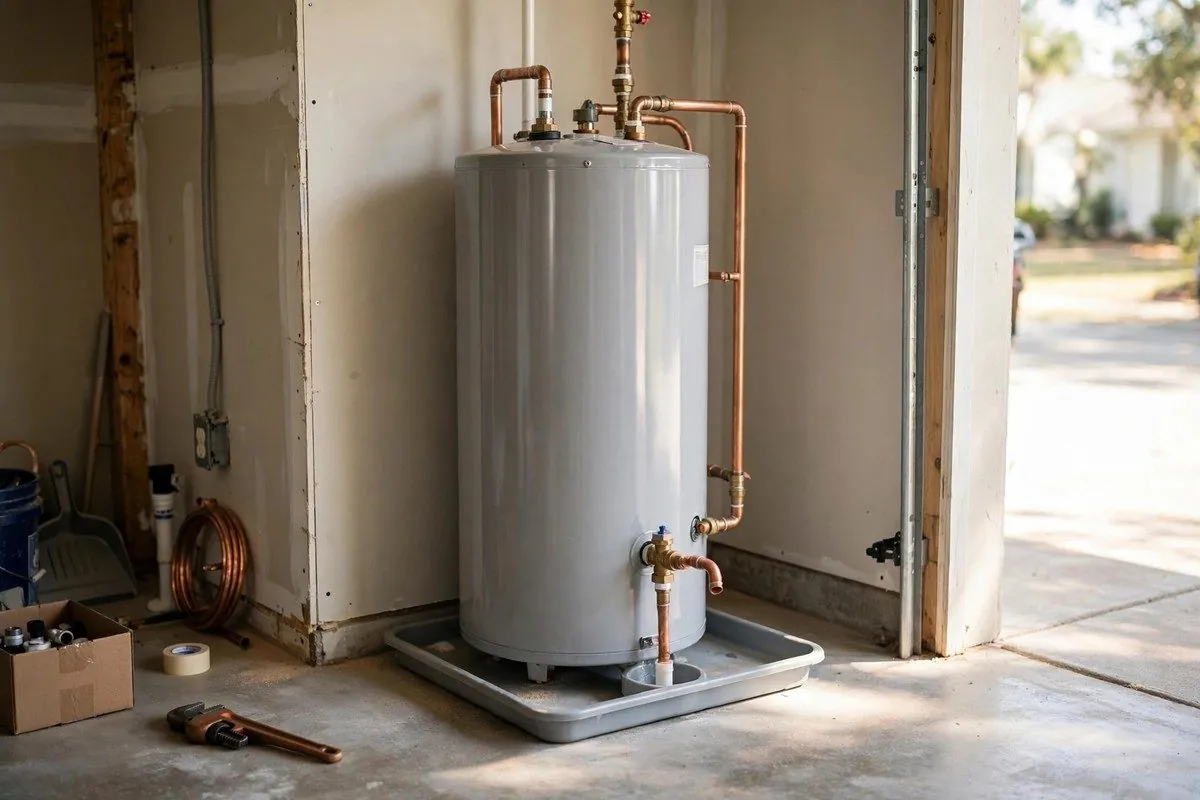
The discharge pipe carries water from the valve to a safe place. Manufacturer instructions and the North Carolina State Plumbing Code govern how it is installed, so ask a licensed plumber to check yours.
- It runs downward from the valve with no upward sections that could hold water.
- It is the same size as the valve outlet or larger, and not reduced along the way.
- It has no valve, cap, threaded plug or screw-on end anywhere on it.
- It ends in a visible spot where a drip can be seen, not hidden behind a wall.
- The material is rated for hot water, since some plastics soften when the water is scalding.
- The end stays clear of the floor drain edge so it is easy to spot a problem.
Scald risk when you work near the valve
Water from a relief valve can be hot enough to scald in seconds. If the valve is discharging, keep children and pets away and do not hold your hand under the pipe. Treat the tank and the pipe as hot even after the heater has been off for a while.
Gas heaters add another hazard. If you smell gas at any point, leave the building and call the gas utility or 911 first, then call us afterward.
What a homeowner can check and where DIY stops
- Look, do not touchNote whether the drip is steady, comes in bursts, or happens only after hot showers. Look at the end of the discharge pipe and at the threads where the valve meets the tank.
- Check the thermostat settingA setting turned far above normal can push the valve open. Lower it a little and see if the drip changes over a day. Do not adjust a gas valve or electrical wiring.
- Test only if the manufacturer says toSome instructions describe lifting the lever briefly with a bucket under the pipe. A valve that fails to reseat afterward needs replacement, so only do this if you can accept that result.
- Call when it drips steadily or the tank is oldDraining the tank, shutting off power or gas, and sealing a new valve on correctly is plumber work. A bad drain or a leaky new valve can create more trouble than the first drip.
Replace the valve or replace the heater?
A new valve on a healthy heater is a modest repair. The question is whether the valve is the real problem or just the messenger. A valve that drips because of a failing thermostat or a tank full of sediment will keep dripping after replacement.
Lean toward replacing the heater when the tank is leaking at the seams, when the valve keeps failing after a new one is fitted, or when the unit is near the end of its normal service life. Lean toward the valve alone when the tank is sound and the leak is only at the seat.
Our water heater repair visits start with a diagnosis so you see the choice before work starts. Our water heater replacement service covers the case where the tank is the issue. We serve Clemmons and nearby towns such as Lewisville, and the service area page lists the rest.
- Ask for the cause of the drip in plain words.
- Ask whether the tank itself shows rust, seam leaks or heavy sediment.
- Ask for the clear price before work starts for both the repair and the replacement.
- Compare written quotes line by line, including parts, labor, disposal and any permit work.
Clemmons plumbing note: water source and permits
Winston-Salem/Forsyth County Utilities reports hardness from 9.0 to 28.0 ppm in its 2025 Water Quality Report, which is soft water. Soft water tends to leave less scale on a valve seat, so a drip on a utility-fed home is more likely to be age, pressure or heater temperature than mineral buildup. Check your bill to see who supplies your water, because some properties use private wells and we cannot say what a well delivers.
Water heater work can involve permits. Ask the Winston-Salem/Forsyth County Inspections Division at 336-727-2624 whether your job needs one, since it serves Clemmons and Lewisville.
Source: Winston-Salem/Forsyth County Utilities 2025 Water Quality Report and Winston-Salem/Forsyth County Inspections Division.
Frequently asked questions
Is it normal for a relief valve to drip a little?
A short drip while the heater is heating can come from thermal expansion. A steady drip all day means the valve is not reseating or the system is over pressure. Either one deserves a look from a licensed plumber.
Can I put a cap on the discharge pipe to stop the leak?
No. A cap or plug blocks the safety path and can let the tank build dangerous pressure. Fix the cause of the drip instead.
Does replacing the valve require draining the tank?
Usually yes, at least partly. The water level has to drop below the valve opening, and power or gas to the heater should be off. That is why most homeowners hand this job to a plumber.
How do I know if the valve or the heater is the problem?
A plumber looks at tank condition, water pressure, thermostat behavior and the valve itself. If the tank is sound and the leak is at the valve seat, a new valve is often enough. Call (336) 453-0472 for a visit.
Is my Clemmons water too soft or hard for my relief valve?
The utility's 2025 report shows soft water, 9.0 to 28.0 ppm hardness, so scale is less often the culprit for utility customers. If you are on a private well, test your tap because well water can differ.
Standards and sources
This guide was written by Clemmons 24/7 Plumbing using general trade practice and the sources named in the local note above. For code questions, the standard to check is the North Carolina State Plumbing Code together with the manufacturer instructions for your product.
Written by Clemmons 24/7 Plumbing. Questions about permits or inspections go to the Winston-Salem/Forsyth County Inspections Division at 336-727-2624, and questions about the water on the utility side of your meter go to your water provider.