Why the plunger changes nothing
A plunger only works on a blockage within a few inches of the drain opening. It pushes and pulls water against the clog until it breaks loose. If the trouble is a layer of grease coating the pipe wall, a blockage far down the line, or a vent that cannot let air in, the plunger just moves water back and forth.
Every drain needs two things to run well: a clear slope and air behind the water. The trap under the sink holds a small plug of water that keeps sewer gas out, and the vent pipe lets air in so the water is not held back by suction. Lose either one and the sink drags even though no single clog is visible.
Match what you see to the likely cause
Start with this table. Most homes show a pattern that points to one row.
| Cause | What you notice | Can you fix it? |
|---|---|---|
| Fouled trap | One sink slow, no other fixture affected | Yes, remove and clean it. |
| Garbage disposal | Slow on the disposal side, water rises in the other basin | Often, clear the disposal and its outlet. |
| Clogged air gap | Dishwasher water spills or backs into the sink | Yes, unscrew the cap and clear it. |
| Partly blocked vent | Gurgling, drain that works one day and drags the next | No, the vent runs to the roof. |
| Shared branch line | Sink and tub or washer all slow together | Rarely, it needs a drain machine. |
| Main line | Lowest drains bubble or back up when water runs elsewhere | No, call a plumber. |
A ten-minute test to sort it out
- Run the other fixturesRun the tub, flush a toilet, and start the washer if you have one. Watch the slow sink and any floor drain. If the sink gurgles or rises while another fixture drains, the lines are shared and the blockage is farther down.
- Open the trapSet a bucket under the sink, loosen the slip nuts by hand, and empty the curved trap. Hair, soap scum and grease packed in the bend are a frequent reason a plunger seems useless.
- Test each side of the disposalWith a double basin, fill one side and let it run. If water climbs into the other side, the restriction is at the disposal, its tailpiece, or the pipe just past it. Check that the dishwasher hose connection is not packed with food.
- Look at the air gapSome dishwashers drain through a small cylinder on the sink deck. Pull off the cap and clear out the debris, since a plugged air gap sends dishwasher water into the sink.
- Listen for gurglingA gurgle when another fixture runs means air is being pulled through the trap. That points to a struggling vent or a line that is running partly full.
A sink that will not drain with no visible clog may have a problem farther down the line, so call (336) 453-0472.
What you can do yourself, and where to stop
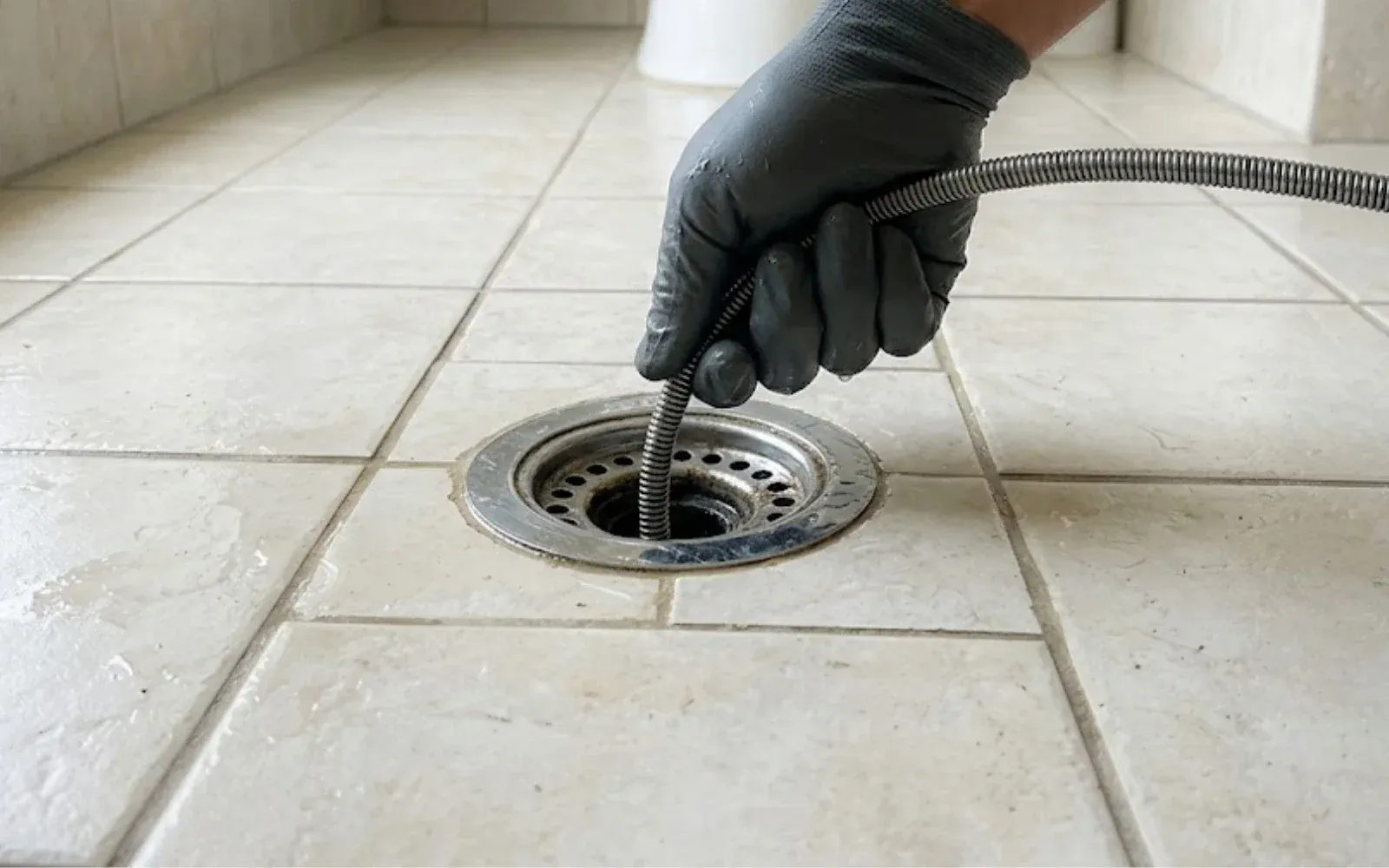
Cleaning the trap, running water through the disposal, and clearing an air gap are safe jobs with basic hand tools. A small hand-cranked drain snake can also clear a short blockage in the sink's own line. Go slowly, and stop if the cable stops against something it will not pass.
Skip the bottle drain cleaners. They pool in standing water and cling to the pipe wall, which can damage a disposal and leave a hazard for whoever opens the line next. If the clog is in a shared line, the product never reaches it anyway.
Vent trouble is not a homeowner job. The vent pipe goes up through the wall and out the roof, and a bird nest, leaves or debris at the top can restrict it. A plumber can tell a vent restriction from a line restriction with a camera and a few simple tests.
When the branch line or main line is the problem
A branch line collects several fixtures, such as a kitchen sink, dishwasher and laundry standpipe. When grease and lint build up inside, the whole group slows down. Drain cleaning with a machine cuts through the buildup and restores the pipe's full diameter, which a plunger cannot do.
The main line carries everything to the sewer or septic tank. The lowest fixtures in the house show trouble first, so a basement floor drain or ground-level tub may bubble or fill when you run a sink upstairs. That pattern calls for sewer line cleaning and usually a camera pass, because roots, a sag or a broken joint can all cause the same symptom.
We serve homes across Lewisville, Clemmons and the rest of our service area, and the first thing a plumber sorts out is which of these two pipes is affected.
Signs it is time to call
Stop working on it and call (336) 453-0472 if you see any of these:
- More than one fixture is slow or gurgling at the same time.
- A floor drain or the lowest toilet bubbles when you run water upstairs.
- A foul smell comes from the drain after you cleaned the trap.
- Water backs up the moment you drain the washer or dishwasher.
- The trap and disposal are clear but the sink still drags.
- You find standing water or damp flooring around a drain.
Clemmons plumbing note: sewer overflows and slow drains
A Forsyth County water quality document says most sudden sanitary sewer overflows in the area come from blockages or from stormwater getting into sewer lines during severe storms. For a homeowner, that means a slow drain on several fixtures right after heavy rain should not be ignored, because the shared line may be carrying more than your own household's water. Mention the timing when you call, since it helps a plumber decide where to look first.
Also check your bill to see who supplies your water and handles your sewer, because some Lewisville and Clemmons-area homes are on septic systems instead. On septic, the same main-line symptoms can come from the tank or drain field, so say which kind of system you have when you call.
Source: Forsyth County water quality document and Town of Lewisville septic guidance.
What to do before you call about a slow sink
A sink that will not drain can have a simple cause or a deeper one, and a few safe checks help you tell which.
- Stop running water into the sink, and bail out standing water so it does not overflow.
- Never mix drain cleaners, because some combinations give off dangerous fumes.
- Wear gloves and put a bucket under the trap before you loosen anything.
- Run water at another sink and flush a toilet to see whether other fixtures are slow too.
- If several fixtures are slow or gurgling, stop using water and call, because the blockage is likely in the main line.
Frequently asked questions
Why does my kitchen sink drain slowly when the plunger does nothing?
The blockage is probably past the plunger's reach. Grease buildup in the trap, disposal or branch line is the usual cause, so open the trap first, then test the other fixtures to see whether the line is shared.
Can a blocked vent make a sink drain slowly?
Yes. Without air entering the vent, water leaves the pipe in a sluggish, gurgling way, and the drain may work fine one day and drag the next. Vent work happens at roof level, so it is a plumber's job.
Is it safe to pour drain cleaner when I cannot find the clog?
We advise against it. The chemicals sit in the standing water, can harm a disposal or old pipe, and leave a hazard for the next person who opens the line. Cleaning the trap and calling for machine work is the safer path.
How can I tell whether it is the main line?
Run water in more than one fixture and watch the lowest drain in the house. If a floor drain bubbles or a toilet gurgles while a sink runs, the main line is the likely culprit.
Could heavy storms make my drains slow in the Clemmons area?
They can. A county water quality document says stormwater getting into sewer lines is one of the main causes of sudden sewer overflows, so a drain that slows across several fixtures after a storm deserves a call. Tell us when it started.
Standards and sources
This guide was written by Clemmons 24/7 Plumbing using general trade practice and the sources named in the local note above. For code questions, the standard to check is the North Carolina State Plumbing Code together with the manufacturer instructions for your product.
Written by Clemmons 24/7 Plumbing. Questions about permits or inspections go to the Winston-Salem/Forsyth County Inspections Division at 336-727-2624, and questions about the water on the utility side of your meter go to your water provider.