Nominal size: why 3/4 does not mean 3/4
Nominal means named, not measured. A 3/4 inch copper tube measures about 7/8 inch across the outside, and its inside is a bit under 3/4. PEX and CPVC water tubing are made to the same outside size as copper, which is why they can share some fittings.
Threaded pipe works on its own scheme. A 3/4 inch tapered pipe thread measures over an inch across the outside, and its threads wedge together as they tighten. Garden hose threads are straight, not tapered, and a 3/4 inch hose thread does not screw into a 3/4 inch pipe thread, even though both carry the number.
When you shop, check the pipe material, the connection type and the thread type, not just the size.
Pipe types and what joins them
This table covers the 3/4 inch water-supply materials a Clemmons homeowner is most likely to meet.
| Material | Usual joint | Adapter to connect it | Watch for |
|---|---|---|---|
| Copper | Solder, press or push-fit | Push-fit or press coupling to PEX or CPVC | Heat damage to nearby plastic. |
| PEX | Crimp, clamp, expansion or push-fit | Fitting made for that PEX type | Mismatched ring and tubing type. |
| CPVC | Solvent cement or push-fit | Push-fit or threaded transition to metal | Wrong cement, brittle old pipe. |
| Galvanized steel | Threaded | Dielectric union or nipple to copper | Rust, corrosion at joints with copper. |
| PVC | Solvent cement | Threaded adapter, drain and cold use only | Not for hot water supply. |
Where 3/4 inch shows up in a house
Many homes run 3/4 inch for the main line and the trunk lines that feed branches, then drop to 1/2 inch for sinks and toilets. Water heaters commonly connect with 3/4 inch hot and cold ports. Outdoor hose bibs often use a 3/4 inch hose thread with a 1/2 inch pipe behind it.
A shutoff valve is the other place to pay attention. Quarter-turn ball valves hold up better than old multi-turn gate valves, which tend to seize and leak at the stem. If you are replacing a valve, match its end connection to the pipe in the wall, not to the valve you are removing.
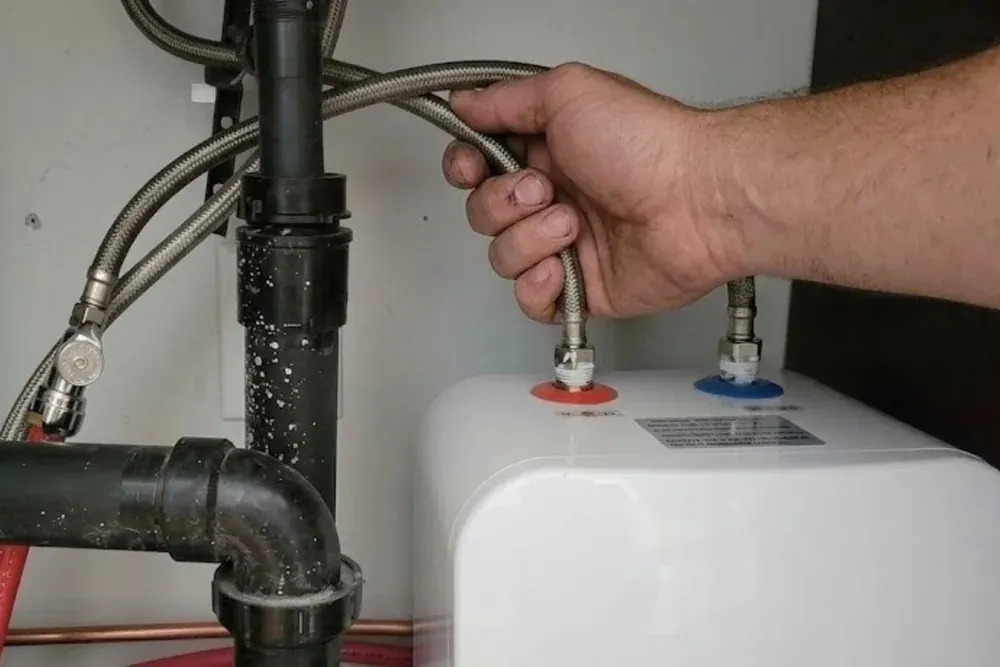
At the water heater, the connection takes extra care. Dissimilar metals at the tank ports corrode when they touch, so a dielectric nipple or union sits between steel and copper. The relief valve discharge line has its own rules, so follow the manufacturer's instructions and ask the Inspections Division if you are unsure.
- Water heater: flexible connectors or rigid pipe, with a dielectric nipple where steel meets copper.
- Hose bib: pipe thread inside, hose thread outside, and a vacuum breaker on the end.
- Main shutoff: a full-port ball valve gives the least restriction.
- Branch lines: check that adapters step down cleanly instead of reducing twice in a row.
Mixing pipe types at one joint is where many leaks start, so call (336) 453-0472 before you buy parts.
Common mistakes that cause leaks
Most failed connections trace back to a short list. Check these before you blame the fitting.
- Mixing solvent cements: PVC cement on CPVC pipe, or the reverse, makes a weak bond.
- Joining copper and galvanized steel directly, which corrodes the joint without a dielectric part.
- Skipping thread sealant on tapered pipe threads, or using it on compression fittings.
- Mismatching PEX tubing with the wrong ring, clamp or expansion fitting.
- Not pushing a push-fit onto a clean, square-cut, fully seated pipe end.
- Overtightening plastic threads until they crack hours or days later.
- Relying on an adapter to fix a pipe that has already been damaged.
A quick path to the right fitting
- Identify the pipeLook for printing on the tubing. Copper is metal, PEX is flexible plastic in red, blue or white, and CPVC is rigid cream or gray plastic.
- Name the connectionDecide whether the joint is solder, press, solvent cement, crimp or threaded, and whether it needs to come apart later.
- Choose a fitting made for that pairMatch material and size in one part, such as a copper-to-PEX transition. Avoid stacking several small adapters when one transition does the job.
- Read the manufacturer's instructionsThey state the pipe types, temperatures and locations the fitting is built for, which is the standard the installation is judged against.
- Test before closing the wallTurn the water on slowly, check each joint with a dry paper towel, and leave it under pressure before you cover anything.
What you can do and when to call
Swapping a hose bib vacuum breaker, replacing a supply line under a sink or tightening a loose union is homeowner territory. Cutting into the main, relocating a water heater connection or mixing three pipe materials in one joint is not, and a leak you cannot see is worse than one you can.
We handle new lines and retrofits through plumbing installation, and a tank swap through water heater installation. We serve Clemmons and nearby towns, including Lewisville, and you can see the rest of our service area online. We explain the price before work starts.
Clemmons plumbing note: permits and licensing for fitting work
Plumbing permits and inspections for Clemmons go through the Winston-Salem/Forsyth County Inspections Division, not the Village planning and zoning office. Ask the Inspections Division at 336-727-2624 whether your job needs a permit. Do that before you cut into a main line or move a water heater connection.
North Carolina law, N.C. G.S. 87-21, requires a license to engage in the business of plumbing contracting. You can look up any plumber on the public license search at public.nclicensing.org/Public/Search before you hire, and a hired plumber should be glad to be checked.
Source: Winston-Salem/Forsyth County Inspections Division and North Carolina plumbing licensing board public search.
Frequently asked questions
What does 3/4 inch mean on a plumbing fitting?
It is a nominal size. For copper, PEX and CPVC water tubing it refers to a tube about 7/8 inch on the outside. For threaded pipe the thread is larger than the label suggests, and garden hose threads follow a separate standard.
Can I connect PEX directly to copper?
Not without the right transition. Use a fitting made for that pair, such as a push-fit or press coupling, and follow the manufacturer's instructions for the specific PEX type.
Why does my hose bib leak at the connection?
Common causes are a worn washer, a missing vacuum breaker or a cracked threaded connection from overtightening. A stem that drips when the spigot is off needs a repair or replacement.
Who decides if my plumbing job in Clemmons needs a permit?
The Winston-Salem/Forsyth County Inspections Division. Call 336-727-2624 and ask whether your job needs a permit, since the answer depends on the work.
Is it okay to use an adapter to join mismatched pipes?
Yes, if the adapter is made for that exact pair and installed to the manufacturer's instructions. A generic fix that relies on tape or sealant to bridge different pipes is a leak waiting to happen.
Standards and sources
This guide was written by Clemmons 24/7 Plumbing using general trade practice and the sources named in the local note above. For code questions, the standard to check is the North Carolina State Plumbing Code together with the manufacturer instructions for your product.
Written by Clemmons 24/7 Plumbing. Questions about permits or inspections go to the Winston-Salem/Forsyth County Inspections Division at 336-727-2624, and questions about the water on the utility side of your meter go to your water provider.