
Five areas to inspect before you buy flooring
Do this walk-through with a flashlight and a dry paper towel. It takes about an hour and can save a floor.
- Slab: look for dark patches, white mineral crust, cracks and a musty smell, then press a paper towel against the concrete for a minute.
- Supply and drain lines: trace every visible pipe for drips, green crust, wet insulation and stains on the joists above.
- Sump pump: confirm the pit lid is secure, the pump runs when you lift the float and the discharge line is clear.
- Floor drains: pour in a bucket of water and watch it leave without gurgling or backing up.
- Water heater: check the base of the tank, the relief valve line and the pan if there is one for any moisture.
What the clues usually mean
Basement moisture rarely announces its cause. This table pairs common clues with the likely source and a sensible first move.
| Clue | Likely source | First move |
|---|---|---|
| Dark spot under or near the water heater | Slow tank leak or a dripping fitting or relief valve | Dry it, watch for two days, then call. |
| Meter keeps moving with all water off | Hidden leak on the supply side | Book leak detection before covering the slab. |
| Damp strip along the wall after rain | Groundwater or poor drainage | Check the sump pit and the gutters. |
| Floor drain gurgles or smells | Dry trap, partial blockage or sewer-side issue | Run water, then call if it persists. |
| Pump runs nonstop or never | Stuck float, failing check valve or clog | Service the pump before flooring goes down. |
The right order of work
- Fix the plumbing firstRepair leaks, replace failing valves and sort out the water heater before any flooring is bought. A leak found after install means pulling up the planks to reach it.
- Test the slabTape a plastic sheet to the floor for two days or use a moisture test kit. Read the flooring manufacturer's limits on slab moisture, since many warranties depend on them.
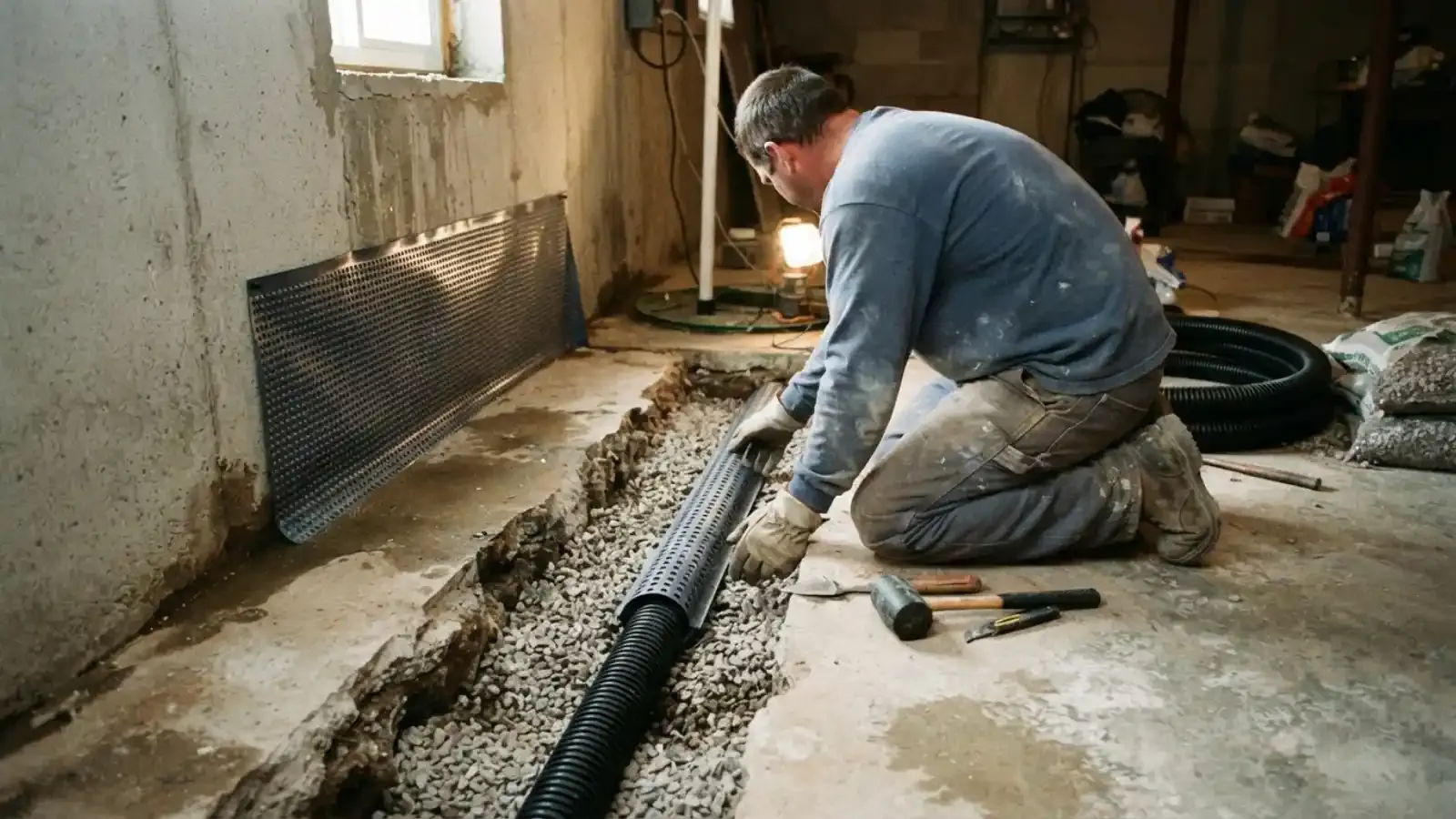
- Fix drainageClear gutters, lengthen downspouts and have the sump pump tested by pouring in water and watching it cycle. A sump pump service visit covers the pit, float, check valve and discharge line.
- Keep accessLeave floor drains, cleanouts, shutoff valves and the area under the water heater reachable. A floating floor should stop short of the drain or have a removable section.
- Install to the instructionsUse the underlayment and expansion gaps the manufacturer specifies. Skipping them can void the warranty and lets planks buckle.
Fix plumbing leaks before new flooring goes down, and call (336) 453-0472 if you suspect moisture below.
How to test a sump pump the right way
A pump that has sat idle since spring may not start when the first heavy rain arrives. Pour a few buckets of water slowly into the pit until the float rises, then watch the pump kick on, empty the pit and shut off. It should not chatter, hum without moving water or restart over and over.
Check the discharge line outside as well. It should carry water well away from the foundation, and a frozen, crushed or clogged line sends the water straight back into the pit. A battery backup is worth asking about if the basement will be finished, since a power loss during a storm is when pumps matter most.
Why waterproof is a surface rating
Vinyl planks are waterproof, but they float over the slab and the seams between them are not a seal. Water that gets underneath can spread sideways and stay there for weeks. Ask the manufacturer what the warranty says about moisture from the slab before you rely on the label.
Water heaters and floor drains deserve special care
A water heater is the most likely appliance to leak in a basement. Many homeowners stop the vinyl a few inches short of the tank or set it in a drain pan, so a leak shows up instead of soaking in. If the heater is old and the base is rusty, replacing it before the floor goes in is far less work than lifting a finished floor later.
Floor drains carry laundry water and, in some basements, backed-up storm water. A drain that smells usually has a dry trap, which means the water seal has evaporated. Pouring in a few cups restores it, and a drain that stays slow after that needs a drain machine, not flooring.
What you can do and when to call
Homeowners can handle the walk-through, the paper towel test and the drain bucket test. Anything that involves moving a pipe, opening a wall, replacing a water heater or testing for a hidden leak with pressure gear belongs to a plumber. We serve Clemmons and nearby towns, including Lewisville, throughout our service area, and our dispatch line is open 24/7.
If the slab keeps testing damp after the plumbing is sound, the flooring may still be possible, but the manufacturer may require a moisture barrier. We cannot judge the slab by phone, so a visit comes first and we explain the price before work starts.
Clemmons plumbing note: permits for basement finishing work
Basement finishing often drags plumbing along with it, such as a new bath, a moved water heater or a rerouted drain. The Winston-Salem/Forsyth County Inspections Division handles plumbing permits and inspections for Clemmons, and the Village handles planning and zoning permits, which is a different office. Ask the Inspections Division at 336-727-2624 whether your job needs a permit before you start.
Doing that call before demolition matters, because an inspector may need to see pipes before you close the wall or lay the floor. We will not guess at which jobs are exempt.
Source: Winston-Salem/Forsyth County Inspections Division service area and Village of Clemmons permit structure.
Frequently asked questions
Should I replace an old water heater before installing basement flooring?
If the tank is rusty at the base or has leaked before, yes. Replacing it afterward means working around a finished floor and risking water damage to it. Call us and a plumber can judge the tank's condition on site.
Can I install waterproof vinyl over a damp basement slab?
It is risky. A damp slab can trap moisture under the planks and void the manufacturer's warranty. Find the moisture source first and test the slab against the manufacturer's limits before installing.
Will vinyl flooring hide a plumbing leak?
Yes, for a while. A leak under the planks can run unseen for weeks, and by the time you notice you may have mold and a warped subfloor edge. Fix leaks before covering anything.
Does a floor drain need to stay uncovered?
It needs to stay reachable. Cut the flooring around the drain or use a removable section so a plumber can reach the cleanout and a drain machine when needed.
Who do I ask about permits for finishing a basement in Clemmons?
Ask the Winston-Salem/Forsyth County Inspections Division at 336-727-2624 whether the plumbing part of your job needs a permit. The Village handles planning and zoning, which is a separate question.
Standards and sources
This guide was written by Clemmons 24/7 Plumbing using general trade practice and the sources named in the local note above. For code questions, the standard to check is the North Carolina State Plumbing Code together with the manufacturer instructions for your product.
Written by Clemmons 24/7 Plumbing. Questions about permits or inspections go to the Winston-Salem/Forsyth County Inspections Division at 336-727-2624, and questions about the water on the utility side of your meter go to your water provider.